Enhancing Accuracy, Safety, and Efficiency in Industrial Pressure Testing
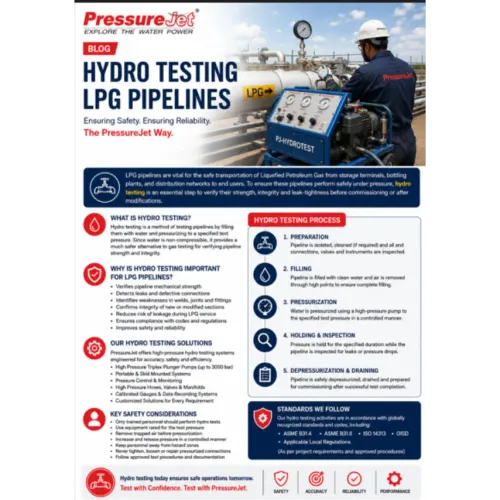
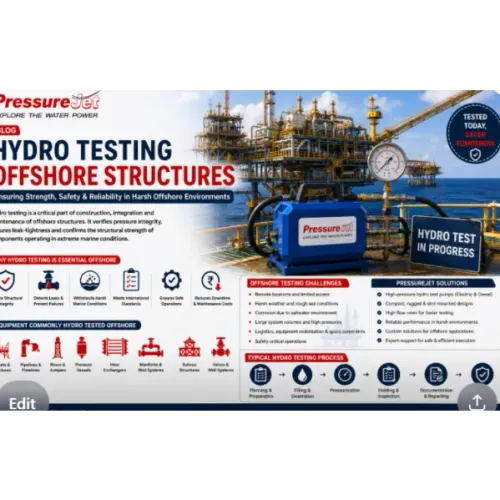
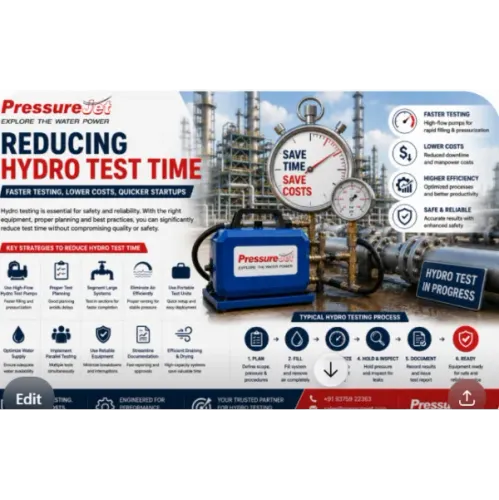
Hydro testing is a critical quality assurance process used to verify the strength and leak resistance of pressure vessels, pipelines, valves, boilers, and industrial components. As industries move toward higher safety standards and faster production cycles, automation has become a defining factor in modern hydro testing systems.
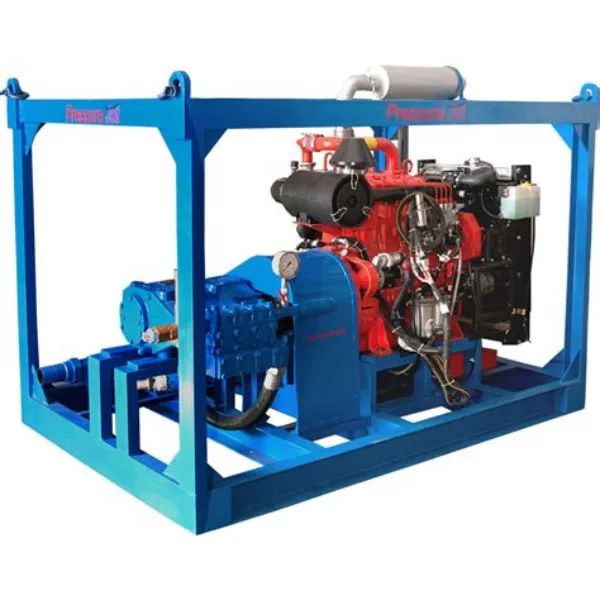
Manufacturers like PressureJet Systems Pvt. Ltd. are increasingly integrating automation technologies into hydro test pump systems to improve accuracy, reduce human error, and enhance operational efficiency across industrial applications.
What Is Automation in Hydro Testing?
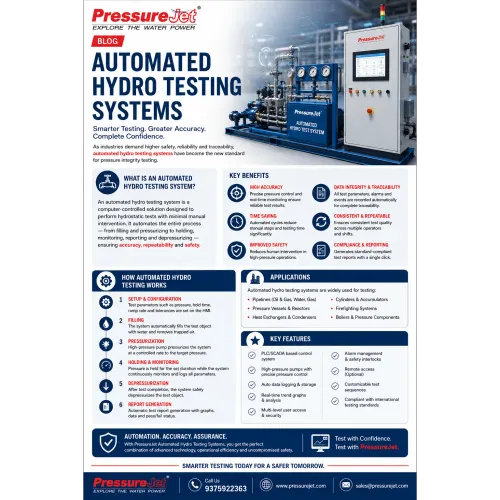
Automation in hydro testing refers to the use of advanced control systems, sensors, and software to manage and monitor pressure testing operations with minimal manual intervention.
Instead of relying on manual pressure control and observation, automated systems use:
PLC (Programmable Logic Controllers)
Digital pressure sensors
Automated valves
Data acquisition systems
Safety interlocks
This allows precise, repeatable, and safer testing processes.
Why Automation Matters in Hydro Testing Systems
1. Improved Accuracy and Repeatability
Manual hydro testing can lead to inconsistencies due to human error or delayed response times. Automation ensures:
Precise pressure control
Consistent test cycles
Standardized testing procedures
Reduced variability between tests
This is especially important in industries where compliance and certification are mandatory.
2. Enhanced Safety Standards
Hydro testing involves extremely high pressures, which can be hazardous if not controlled properly.
Automated systems improve safety through:
Real-time pressure monitoring
Automatic shut-off mechanisms
Emergency pressure release systems
Alarm notifications for abnormal conditions
These features significantly reduce the risk of equipment failure or operator injury.
3. Increased Operational Efficiency
Automation streamlines the entire testing workflow, allowing industries to:
Reduce testing time
Increase throughput
Minimize manual supervision
Operate multiple test stations simultaneously
This leads to higher productivity in manufacturing and maintenance environments.
4. Real-Time Data Monitoring and Logging
Modern automated hydro testing systems can record and store critical data such as:
Pressure curves
Hold time results
Leakage detection data
Cycle completion reports
This data is essential for:
Quality assurance documentation
Regulatory compliance
Process optimization
Traceability of tested components
5. Reduced Operational Costs
Although automated systems may require higher initial investment, they reduce long-term costs by:
Lowering manpower requirements
Minimizing equipment failures
Reducing downtime
Improving maintenance scheduling
Over time, automation delivers strong return on investment (ROI).
Key Components of Automated Hydro Testing Systems
Modern automated hydro testing systems typically include:
Component Function
PLC Control Panel Manages entire testing cycle
Pressure Sensors Monitor real-time pressure levels
Automated Valves Control fluid flow and pressure release
HMI Interface User-friendly control dashboard
Data Logging System Stores test results digitally
Safety Interlocks Prevent system overload or failure
These components work together to ensure precision and reliability.
Industrial Applications of Automated Hydro Testing
Automation is widely used across industries such as:
Oil & gas pipeline testing
Boiler and pressure vessel manufacturing
Heat exchanger testing
Valve and cylinder testing
Power generation plants
Shipbuilding and marine engineering
In all these sectors, safety, speed, and accuracy are critical requirements.
Role of PressureJet Systems Pvt. Ltd. in Automation
With increasing industrial demand for smarter and safer testing solutions, PressureJet Systems Pvt. Ltd. has been contributing to the evolution of hydro testing technology by offering advanced systems designed for performance, reliability, and automation readiness.
Their hydro test solutions are engineered to support:
Precise pressure control systems
Durable high-pressure pump designs
Industrial-grade automation integration
Efficient field and factory testing applications
This focus on engineering excellence helps industries achieve consistent testing results while improving operational safety and efficiency.
Future of Automation in Hydro Testing
The hydro testing industry is rapidly evolving toward smarter systems featuring:
IoT-enabled remote monitoring
AI-based predictive maintenance
Cloud-based data storage
Fully automated testing cycles
Energy-efficient pump systems
These innovations are expected to make hydro testing more intelligent, connected, and cost-effective.
Conclusion
Automation is transforming hydro testing from a manual, labor-intensive process into a precise, safe, and highly efficient industrial operation. By integrating advanced control systems and digital monitoring tools, modern hydro testing systems deliver better accuracy, improved safety, and significant cost savings.
Manufacturers like PressureJet Systems Pvt. Ltd. are playing an important role in this transformation by providing robust and automation-ready hydro testing solutions that meet the growing demands of modern industries.
Hydro testing is a critical quality assurance process used to verify the strength and leak resistance of pressure vessels, pipelines, valves, boilers, and industrial components. As industries move toward higher safety standards and faster production cycles, automation has become a defining factor in modern hydro testing systems.
Manufacturers like PressureJet Systems Pvt. Ltd. are increasingly integrating automation technologies into hydro test pump systems to improve accuracy, reduce human error, and enhance operational efficiency across industrial applications.
What Is Automation in Hydro Testing?
Automation in hydro testing refers to the use of advanced control systems, sensors, and software to manage and monitor pressure testing operations with minimal manual intervention.
Instead of relying on manual pressure control and observation, automated systems use:
PLC (Programmable Logic Controllers)
Digital pressure sensors
Automated valves
Data acquisition systems
Safety interlocks
This allows precise, repeatable, and safer testing processes.
Why Automation Matters in Hydro Testing Systems
1. Improved Accuracy and Repeatability
Manual hydro testing can lead to inconsistencies due to human error or delayed response times. Automation ensures:
Precise pressure control
Consistent test cycles
Standardized testing procedures
Reduced variability between tests
This is especially important in industries where compliance and certification are mandatory.
2. Enhanced Safety Standards
Hydro testing involves extremely high pressures, which can be hazardous if not controlled properly.
Automated systems improve safety through:
Real-time pressure monitoring
Automatic shut-off mechanisms
Emergency pressure release systems
Alarm notifications for abnormal conditions
These features significantly reduce the risk of equipment failure or operator injury.
3. Increased Operational Efficiency
Automation streamlines the entire testing workflow, allowing industries to:
Reduce testing time
Increase throughput
Minimize manual supervision
Operate multiple test stations simultaneously
This leads to higher productivity in manufacturing and maintenance environments.
4. Real-Time Data Monitoring and Logging
Modern automated hydro testing systems can record and store critical data such as:
Pressure curves
Hold time results
Leakage detection data
Cycle completion reports
This data is essential for:
Quality assurance documentation
Regulatory compliance
Process optimization
Traceability of tested components
5. Reduced Operational Costs
Although automated systems may require higher initial investment, they reduce long-term costs by:
Lowering manpower requirements
Minimizing equipment failures
Reducing downtime
Improving maintenance scheduling
Over time, automation delivers strong return on investment (ROI).
Key Components of Automated Hydro Testing Systems
Modern automated hydro testing systems typically include:
Component Function
PLC Control Panel Manages entire testing cycle
Pressure Sensors Monitor real-time pressure levels
Automated Valves Control fluid flow and pressure release
HMI Interface User-friendly control dashboard
Data Logging System Stores test results digitally
Safety Interlocks Prevent system overload or failure
These components work together to ensure precision and reliability.
Industrial Applications of Automated Hydro Testing
Automation is widely used across industries such as:
Oil & gas pipeline testing
Boiler and pressure vessel manufacturing
Heat exchanger testing
Valve and cylinder testing
Power generation plants
Shipbuilding and marine engineering
In all these sectors, safety, speed, and accuracy are critical requirements.
Role of PressureJet Systems Pvt. Ltd. in Automation
With increasing industrial demand for smarter and safer testing solutions, PressureJet Systems Pvt. Ltd. has been contributing to the evolution of hydro testing technology by offering advanced systems designed for performance, reliability, and automation readiness.
Their hydro test solutions are engineered to support:
Precise pressure control systems
Durable high-pressure pump designs
Industrial-grade automation integration
Efficient field and factory testing applications
This focus on engineering excellence helps industries achieve consistent testing results while improving operational safety and efficiency.
Future of Automation in Hydro Testing
The hydro testing industry is rapidly evolving toward smarter systems featuring:
IoT-enabled remote monitoring
AI-based predictive maintenance
Cloud-based data storage
Fully automated testing cycles
Energy-efficient pump systems
These innovations are expected to make hydro testing more intelligent, connected, and cost-effective.
Conclusion
Automation is transforming hydro testing from a manual, labor-intensive process into a precise, safe, and highly efficient industrial operation. By integrating advanced control systems and digital monitoring tools, modern hydro testing systems deliver better accuracy, improved safety, and significant cost savings.
Manufacturers like PressureJet Systems Pvt. Ltd. are playing an important role in this transformation by providing robust and automation-ready hydro testing solutions that meet the growing demands of modern industries.
Keywords