Ensuring Long Life, Safety, and Peak Performance in Industrial Testing
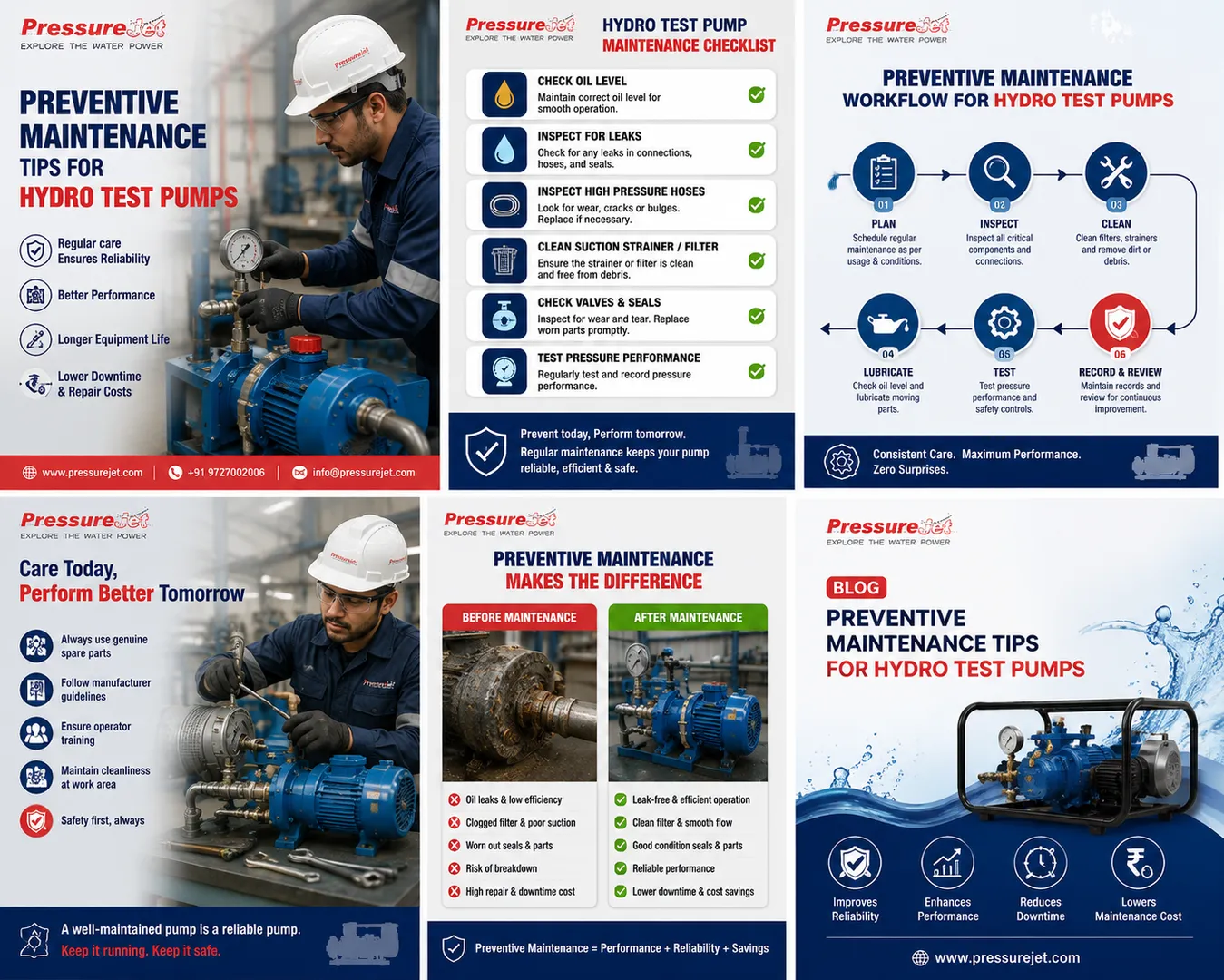
Hydro test pumps are critical equipment used for pressure testing pipelines, boilers, pressure vessels, valves, and industrial systems. Because these pumps operate under high pressure and demanding conditions, preventive maintenance is essential to ensure reliability, safety, and long service life.
Manufacturers like PressureJet Systems Pvt. Ltd. design robust hydro test pump systems, but even the most advanced equipment performs best when supported by a disciplined maintenance routine.
Why Preventive Maintenance Matters
Preventive maintenance is a proactive approach that helps detect and address issues before they lead to failure. For hydro test pumps, this is especially important because:
They operate under very high pressure
Small leaks can become major safety risks
Downtime can disrupt entire industrial operations
Wear and tear happens gradually but continuously
A structured maintenance plan ensures consistent performance and avoids costly breakdowns.
Key Preventive Maintenance Tips for Hydro Test Pumps
1. Regular Inspection of Pump Components
Frequent visual inspection helps identify early signs of damage such as:
Cracks or wear in pump housing
Loose fittings or connections
Leakage around seals and valves
Corrosion on metal surfaces
Early detection prevents major failures and ensures safe operation.
2. Monitor Oil and Lubrication Levels
Proper lubrication is essential for smooth pump operation.
Best practices include:
Checking oil levels regularly
Using recommended lubricants
Replacing oil at scheduled intervals
Avoiding contamination of lubrication systems
This reduces friction and extends component life.
3. Maintain Clean Water Supply
Hydro test pumps rely on water as the testing medium. Impurities can cause serious damage.
Ensure:
Use of filtered water
Avoiding sand, rust, or debris
Cleaning intake filters regularly
Preventing sediment buildup
Clean water improves pump efficiency and prevents internal wear.
4. Check Seals and Valves Frequently
Seals and valves are critical for pressure control.
Maintenance actions include:
Inspecting for leaks or wear
Replacing worn-out seals immediately
Ensuring proper valve seating
Cleaning valve assemblies regularly
This ensures accurate pressure control during testing.
5. Monitor Pressure Gauges and Sensors
Accurate pressure readings are essential for safe hydro testing.
Make sure to:
Calibrate pressure gauges periodically
Check sensor accuracy
Replace faulty instruments
Avoid over-pressurization
Reliable readings ensure compliance and safety.
6. Inspect Hoses and High-Pressure Lines
High-pressure hoses are subject to extreme stress.
Preventive measures:
Check for cracks or bulges
Replace damaged hoses immediately
Avoid twisting or bending beyond limits
Use pressure-rated components only
This prevents sudden failures during operation.
7. Clean Pump System After Every Use
Cleaning prevents long-term damage caused by residue buildup.
Steps include:
Flushing the system with clean water
Removing sediment from internal parts
Cleaning filters and strainers
Drying components when required
This is especially important in dusty industrial environments.
8. Check Alignment and Mechanical Tightness
Misalignment can cause vibration and reduce pump life.
Ensure:
Proper alignment of motor and pump
Tightening of bolts and fasteners
Stability of mounting base
Absence of excessive vibration
This improves operational stability.
9. Follow Scheduled Servicing
Routine servicing should be performed based on usage cycles.
Service activities include:
Replacement of worn components
Internal cleaning and inspection
Seal and valve replacement
Performance testing after servicing
Scheduled maintenance ensures long-term reliability.
10. Train Operators Properly
Operator handling plays a major role in pump life.
Training should cover:
Safe startup and shutdown procedures
Pressure control techniques
Emergency handling
Basic troubleshooting
Well-trained operators reduce the risk of misuse.
Role of PressureJet Systems Pvt. Ltd. in Reliable Pump Performance
PressureJet Systems Pvt. Ltd. is known for engineering durable and high-performance hydro test pump systems designed for industrial applications.
Their equipment supports preventive maintenance through:
Easy-access design for servicing
Robust stainless steel components
High-quality sealing systems
Stable pressure control mechanisms
Long operational life engineering
These features help industries maintain efficiency while minimizing downtime.
Common Signs That Maintenance Is Needed
Watch out for:
Sudden pressure drops
Unusual noise or vibration
Leakage from seals or fittings
Inconsistent test results
Reduced pump efficiency
Addressing these early prevents major system failures.
Benefits of Preventive Maintenance
A strong maintenance routine offers:
Longer pump lifespan
Improved safety
Reduced downtime
Lower repair costs
Better testing accuracy
Higher operational efficiency
Future of Maintenance in Hydro Testing Systems
Modern hydro test systems are evolving with:
Predictive maintenance using sensors
IoT-based performance tracking
Real-time diagnostics
Automated alerts for failures
AI-driven maintenance scheduling
These technologies will make maintenance more efficient and data-driven.
Conclusion
Preventive maintenance is essential for ensuring the safe, efficient, and long-lasting operation of hydro test pumps. By following structured maintenance practices, industries can reduce downtime, improve safety, and maximize equipment performance.
With robust engineering and durable design, PressureJet Systems Pvt. Ltd. continues to support industries with reliable hydro testing solutions that are built for performance and easy maintenance.
Hydro test pumps are critical equipment used for pressure testing pipelines, boilers, pressure vessels, valves, and industrial systems. Because these pumps operate under high pressure and demanding conditions, preventive maintenance is essential to ensure reliability, safety, and long service life.
Manufacturers like PressureJet Systems Pvt. Ltd. design robust hydro test pump systems, but even the most advanced equipment performs best when supported by a disciplined maintenance routine.
Why Preventive Maintenance Matters
Preventive maintenance is a proactive approach that helps detect and address issues before they lead to failure. For hydro test pumps, this is especially important because:
They operate under very high pressure
Small leaks can become major safety risks
Downtime can disrupt entire industrial operations
Wear and tear happens gradually but continuously
A structured maintenance plan ensures consistent performance and avoids costly breakdowns.
Key Preventive Maintenance Tips for Hydro Test Pumps
1. Regular Inspection of Pump Components
Frequent visual inspection helps identify early signs of damage such as:
Cracks or wear in pump housing
Loose fittings or connections
Leakage around seals and valves
Corrosion on metal surfaces
Early detection prevents major failures and ensures safe operation.
2. Monitor Oil and Lubrication Levels
Proper lubrication is essential for smooth pump operation.
Best practices include:
Checking oil levels regularly
Using recommended lubricants
Replacing oil at scheduled intervals
Avoiding contamination of lubrication systems
This reduces friction and extends component life.
3. Maintain Clean Water Supply
Hydro test pumps rely on water as the testing medium. Impurities can cause serious damage.
Ensure:
Use of filtered water
Avoiding sand, rust, or debris
Cleaning intake filters regularly
Preventing sediment buildup
Clean water improves pump efficiency and prevents internal wear.
4. Check Seals and Valves Frequently
Seals and valves are critical for pressure control.
Maintenance actions include:
Inspecting for leaks or wear
Replacing worn-out seals immediately
Ensuring proper valve seating
Cleaning valve assemblies regularly
This ensures accurate pressure control during testing.
5. Monitor Pressure Gauges and Sensors
Accurate pressure readings are essential for safe hydro testing.
Make sure to:
Calibrate pressure gauges periodically
Check sensor accuracy
Replace faulty instruments
Avoid over-pressurization
Reliable readings ensure compliance and safety.
6. Inspect Hoses and High-Pressure Lines
High-pressure hoses are subject to extreme stress.
Preventive measures:
Check for cracks or bulges
Replace damaged hoses immediately
Avoid twisting or bending beyond limits
Use pressure-rated components only
This prevents sudden failures during operation.
7. Clean Pump System After Every Use
Cleaning prevents long-term damage caused by residue buildup.
Steps include:
Flushing the system with clean water
Removing sediment from internal parts
Cleaning filters and strainers
Drying components when required
This is especially important in dusty industrial environments.
8. Check Alignment and Mechanical Tightness
Misalignment can cause vibration and reduce pump life.
Ensure:
Proper alignment of motor and pump
Tightening of bolts and fasteners
Stability of mounting base
Absence of excessive vibration
This improves operational stability.
9. Follow Scheduled Servicing
Routine servicing should be performed based on usage cycles.
Service activities include:
Replacement of worn components
Internal cleaning and inspection
Seal and valve replacement
Performance testing after servicing
Scheduled maintenance ensures long-term reliability.
10. Train Operators Properly
Operator handling plays a major role in pump life.
Training should cover:
Safe startup and shutdown procedures
Pressure control techniques
Emergency handling
Basic troubleshooting
Well-trained operators reduce the risk of misuse.
Role of PressureJet Systems Pvt. Ltd. in Reliable Pump Performance
PressureJet Systems Pvt. Ltd. is known for engineering durable and high-performance hydro test pump systems designed for industrial applications.
Their equipment supports preventive maintenance through:
Easy-access design for servicing
Robust stainless steel components
High-quality sealing systems
Stable pressure control mechanisms
Long operational life engineering
These features help industries maintain efficiency while minimizing downtime.
Common Signs That Maintenance Is Needed
Watch out for:
Sudden pressure drops
Unusual noise or vibration
Leakage from seals or fittings
Inconsistent test results
Reduced pump efficiency
Addressing these early prevents major system failures.
Benefits of Preventive Maintenance
A strong maintenance routine offers:
Longer pump lifespan
Improved safety
Reduced downtime
Lower repair costs
Better testing accuracy
Higher operational efficiency
Future of Maintenance in Hydro Testing Systems
Modern hydro test systems are evolving with:
Predictive maintenance using sensors
IoT-based performance tracking
Real-time diagnostics
Automated alerts for failures
AI-driven maintenance scheduling
These technologies will make maintenance more efficient and data-driven.
Conclusion
Preventive maintenance is essential for ensuring the safe, efficient, and long-lasting operation of hydro test pumps. By following structured maintenance practices, industries can reduce downtime, improve safety, and maximize equipment performance.
With robust engineering and durable design, PressureJet Systems Pvt. Ltd. continues to support industries with reliable hydro testing solutions that are built for performance and easy maintenance.
Keywords