PressureJet Hydro Testing Standards and Industry Guidelines
Ensuring Safety, Accuracy, and Compliance in High-Pressure Testing Systems
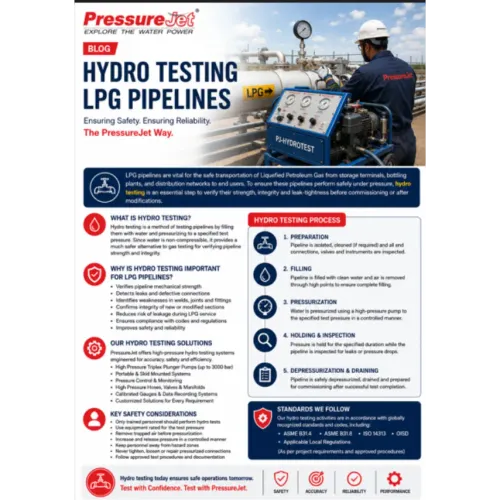
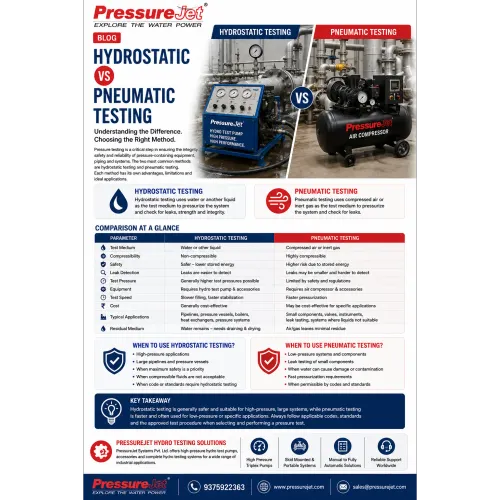
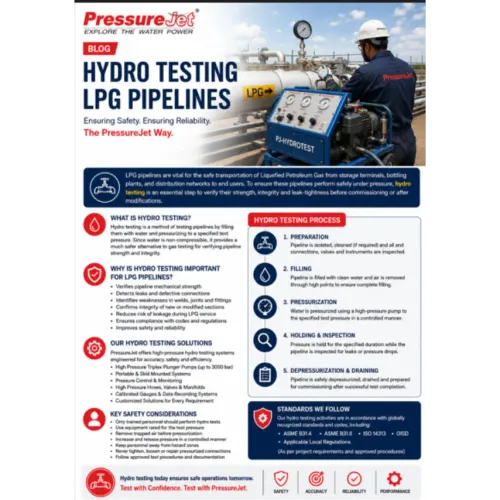
Hydro testing is a mandatory industrial process used to validate the strength, leak resistance, and safety of pressure equipment such as pipelines, boilers, valves, cylinders, and pressure vessels. To ensure consistent quality and operational safety, hydro testing must follow strict international and industrial standards.
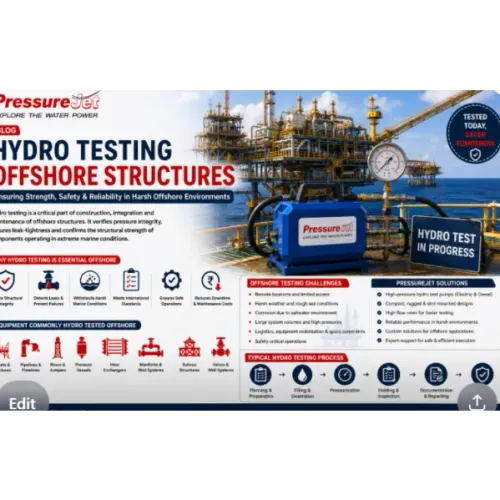
Manufacturers like PressureJet Systems Pvt. Ltd. play a key role in designing hydro testing systems that align with these global standards, ensuring reliability across industries such as oil & gas, power generation, marine, and manufacturing.
What Are Hydro Testing Standards?
Hydro testing standards are defined technical guidelines that specify how pressure testing should be conducted to ensure safety and accuracy. These standards cover:
Test pressure levels
Holding time requirements
Equipment safety margins
Fluid selection (typically water)
Leakage tolerance limits
Testing procedures and documentation
Following these standards ensures that equipment can safely operate under real-world pressure conditions.
Key International Hydro Testing Standards
1. ASME Boiler and Pressure Vessel Code (BPVC)
The ASME (American Society of Mechanical Engineers) BPVC is one of the most widely used standards globally.
It defines:
Pressure vessel testing requirements
Safety factors for design
Hydrostatic test procedures
Material specifications
This standard is essential for industries like boilers, heat exchangers, and pressure vessels.
2. API Standards
The American Petroleum Institute provides guidelines for oil and gas pipeline and equipment testing.
Key aspects include:
Pipeline integrity testing
Field hydrostatic test procedures
Pressure safety limits
Environmental considerations
These standards are critical for upstream and downstream oil & gas operations.
3. ISO Standards
The International Organization for Standardization defines global quality and safety benchmarks.
Relevant ISO standards include:
Pressure equipment safety rules
Quality management systems
Testing documentation requirements
ISO ensures uniform testing practices across countries and industries.
PressureJet’s Role in Maintaining Hydro Testing Standards
Modern hydro testing systems must not only generate high pressure but also ensure controlled, accurate, and safe testing conditions.
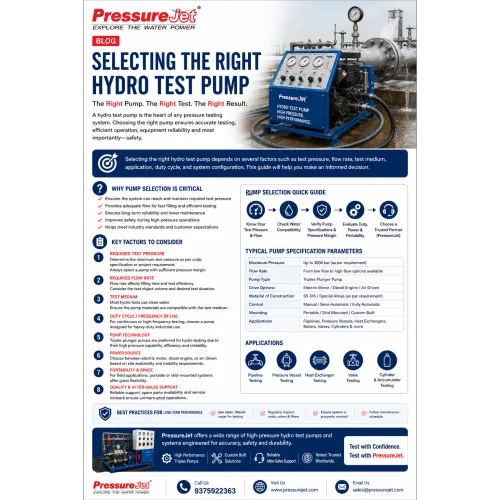
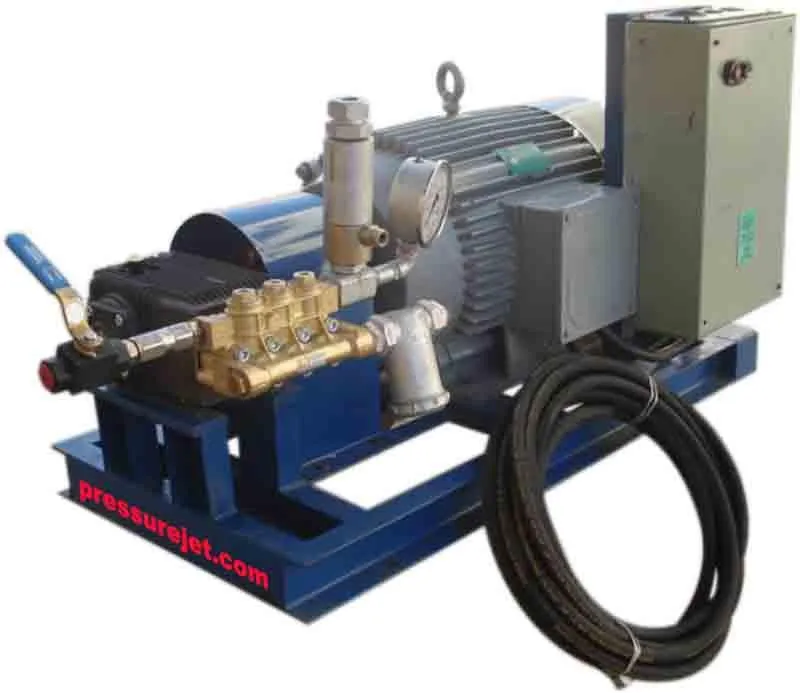
PressureJet Systems Pvt. Ltd. focuses on engineering hydro test pumps and systems that comply with industry standards by integrating:
High-precision pressure control systems
Durable stainless steel components
Safety relief mechanisms
Accurate pressure monitoring instruments
Industrial-grade design for continuous operation
This ensures that users can meet ASME, API, and ISO compliance requirements with confidence.
Core Industry Guidelines for Hydro Testing
1. Proper System Calibration
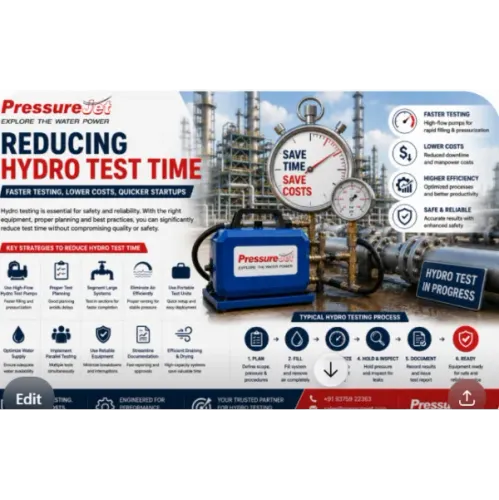
All hydro test systems must be calibrated regularly to ensure accurate pressure readings and consistent results.
2. Safe Pressure Limits
Testing pressure is typically set higher than operating pressure, but must remain within safe design limits to avoid equipment failure.
3. Controlled Pressure Increase
Pressure should be increased gradually to prevent sudden stress on equipment.
4. Holding Time Compliance
Equipment must maintain pressure for a specified duration to confirm leak-free performance.
5. Leak Detection and Monitoring
Operators must carefully inspect for:
Pressure drops
Visible leaks
Structural deformation
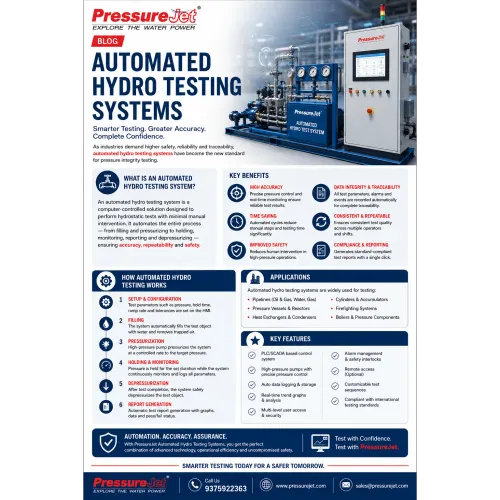
Modern systems often use digital sensors for real-time monitoring.
6. Proper Documentation
Test results must be recorded for:
Compliance audits
Quality assurance
Regulatory certification
Importance of Following Standards
Adhering to hydro testing standards ensures:
Worker safety
Equipment reliability
Regulatory compliance
Reduced failure risks
Long-term operational efficiency
Failure to follow standards can lead to serious safety hazards and costly equipment damage.
Industry Applications
Hydro testing standards are essential in:
Oil & gas pipelines
Boiler manufacturing
Power plants
Marine engineering
Chemical processing plants
Manufacturing industries
Future of Hydro Testing Standards
The industry is moving toward:
Digital compliance tracking
Automated test validation
IoT-based monitoring systems
AI-assisted pressure analysis
Remote certification systems
These advancements will make hydro testing more precise, traceable, and efficient.
Conclusion
Hydro testing standards are essential for ensuring safety, performance, and compliance across industrial systems. Global guidelines from ASME, API, and ISO provide a structured framework for conducting reliable pressure testing.
With strong engineering expertise, PressureJet Systems Pvt. Ltd. continues to deliver hydro testing solutions designed to meet these stringent standards, helping industries maintain safety, efficiency, and long-term reliability.
Ensuring Safety, Accuracy, and Compliance in High-Pressure Testing Systems
Hydro testing is a mandatory industrial process used to validate the strength, leak resistance, and safety of pressure equipment such as pipelines, boilers, valves, cylinders, and pressure vessels. To ensure consistent quality and operational safety, hydro testing must follow strict international and industrial standards.
Manufacturers like PressureJet Systems Pvt. Ltd. play a key role in designing hydro testing systems that align with these global standards, ensuring reliability across industries such as oil & gas, power generation, marine, and manufacturing.
What Are Hydro Testing Standards?
Hydro testing standards are defined technical guidelines that specify how pressure testing should be conducted to ensure safety and accuracy. These standards cover:
Test pressure levels
Holding time requirements
Equipment safety margins
Fluid selection (typically water)
Leakage tolerance limits
Testing procedures and documentation
Following these standards ensures that equipment can safely operate under real-world pressure conditions.
Key International Hydro Testing Standards
1. ASME Boiler and Pressure Vessel Code (BPVC)
The ASME (American Society of Mechanical Engineers) BPVC is one of the most widely used standards globally.
It defines:
Pressure vessel testing requirements
Safety factors for design
Hydrostatic test procedures
Material specifications
This standard is essential for industries like boilers, heat exchangers, and pressure vessels.
2. API Standards
The American Petroleum Institute provides guidelines for oil and gas pipeline and equipment testing.
Key aspects include:
Pipeline integrity testing
Field hydrostatic test procedures
Pressure safety limits
Environmental considerations
These standards are critical for upstream and downstream oil & gas operations.
3. ISO Standards
The International Organization for Standardization defines global quality and safety benchmarks.
Relevant ISO standards include:
Pressure equipment safety rules
Quality management systems
Testing documentation requirements
ISO ensures uniform testing practices across countries and industries.
PressureJet’s Role in Maintaining Hydro Testing Standards
Modern hydro testing systems must not only generate high pressure but also ensure controlled, accurate, and safe testing conditions.
PressureJet Systems Pvt. Ltd. focuses on engineering hydro test pumps and systems that comply with industry standards by integrating:
High-precision pressure control systems
Durable stainless steel components
Safety relief mechanisms
Accurate pressure monitoring instruments
Industrial-grade design for continuous operation
This ensures that users can meet ASME, API, and ISO compliance requirements with confidence.
Core Industry Guidelines for Hydro Testing
1. Proper System Calibration
All hydro test systems must be calibrated regularly to ensure accurate pressure readings and consistent results.
2. Safe Pressure Limits
Testing pressure is typically set higher than operating pressure, but must remain within safe design limits to avoid equipment failure.
3. Controlled Pressure Increase
Pressure should be increased gradually to prevent sudden stress on equipment.
4. Holding Time Compliance
Equipment must maintain pressure for a specified duration to confirm leak-free performance.
5. Leak Detection and Monitoring
Operators must carefully inspect for:
Pressure drops
Visible leaks
Structural deformation
Modern systems often use digital sensors for real-time monitoring.
6. Proper Documentation
Test results must be recorded for:
Compliance audits
Quality assurance
Regulatory certification
Importance of Following Standards
Adhering to hydro testing standards ensures:
Worker safety
Equipment reliability
Regulatory compliance
Reduced failure risks
Long-term operational efficiency
Failure to follow standards can lead to serious safety hazards and costly equipment damage.
Industry Applications
Hydro testing standards are essential in:
Oil & gas pipelines
Boiler manufacturing
Power plants
Marine engineering
Chemical processing plants
Manufacturing industries
Future of Hydro Testing Standards
The industry is moving toward:
Digital compliance tracking
Automated test validation
IoT-based monitoring systems
AI-assisted pressure analysis
Remote certification systems
These advancements will make hydro testing more precise, traceable, and efficient.
Conclusion
Hydro testing standards are essential for ensuring safety, performance, and compliance across industrial systems. Global guidelines from ASME, API, and ISO provide a structured framework for conducting reliable pressure testing.
With strong engineering expertise, PressureJet Systems Pvt. Ltd. continues to deliver hydro testing solutions designed to meet these stringent standards, helping industries maintain safety, efficiency, and long-term reliability.
Keywords