Choosing the Right Hydro Testing Solution for Industrial Applications
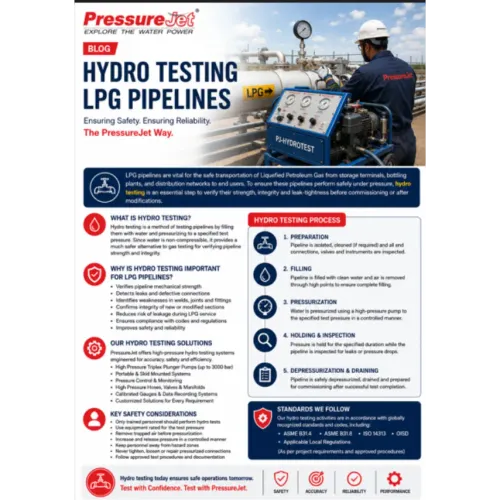
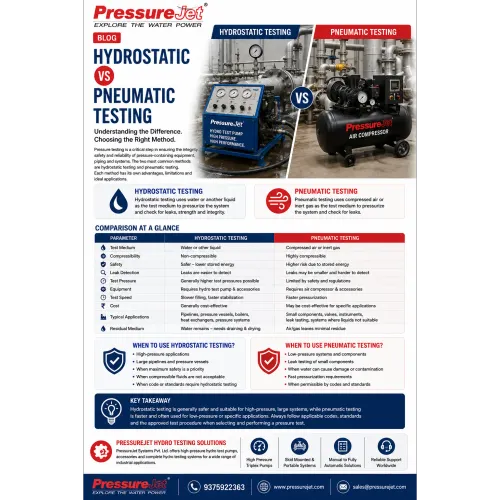
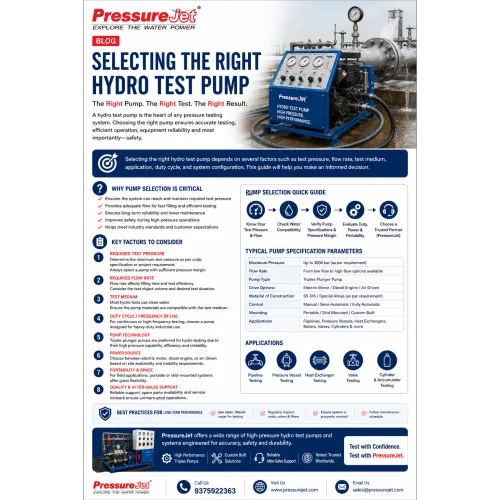
Hydrostatic testing is a critical process used across industries to verify the integrity, strength, and leak resistance of pipelines, pressure vessels, boilers, cylinders, valves, and other pressurized systems. Selecting the right hydro test equipment can significantly impact operational efficiency, safety, mobility, and maintenance costs.
One of the most common decisions industries face is choosing between portable hydro test units and stationary hydro test systems. Both solutions offer unique advantages depending on operational requirements, testing frequency, pressure range, and work environment.
Companies like PressureJet Systems Pvt. Ltd. provide advanced hydro testing solutions tailored for diverse industrial applications, helping organizations optimize testing performance and reliability.
Understanding Hydro Test Systems
Hydro test systems are designed to generate high-pressure water flow to test equipment under controlled pressure conditions. These systems ensure:
Leak detection
Structural integrity verification
Compliance with safety regulations
Pressure endurance validation
Depending on operational needs, industries may choose either:
Portable Hydro Test Units
Stationary Hydro Test Systems
Understanding the differences between these systems is essential for selecting the most efficient solution.
What Are Portable Hydro Test Units?
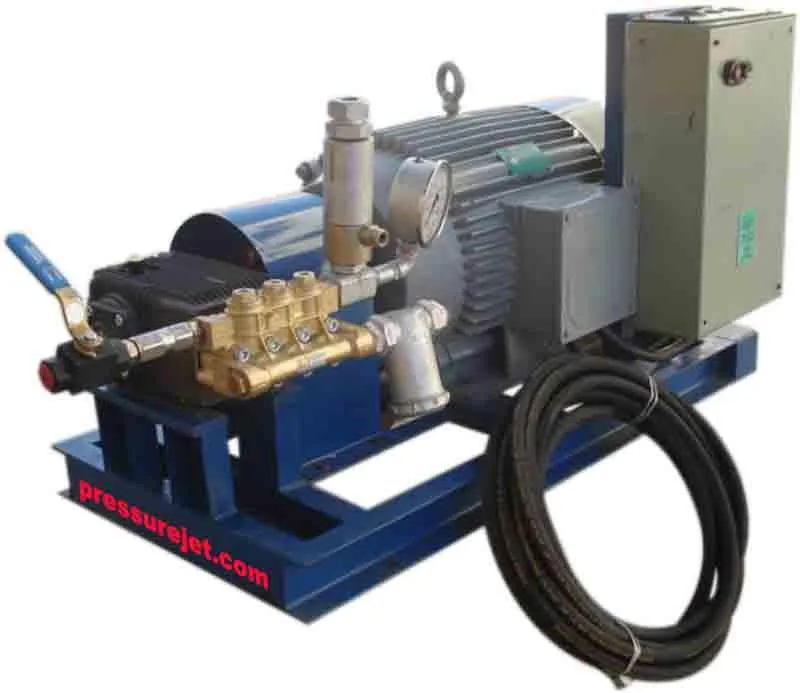
Portable hydro test units are compact, mobile pressure testing systems designed for field operations and on-site testing applications.
These units are commonly mounted on:
Skids
Trolleys
Portable frames
Compact wheeled assemblies
They are specifically engineered for applications where mobility and flexibility are important.
Key Advantages of Portable Hydro Test Units
1. Excellent Mobility
Portable systems can be easily transported to different job locations, making them ideal for:
Pipeline field testing
Offshore operations
Remote industrial sites
Construction projects
Maintenance shutdowns
This mobility reduces the need to move large equipment to testing facilities.
2. Faster On-Site Testing
Portable hydro test units allow technicians to conduct tests directly at the installation location, minimizing downtime and improving workflow efficiency.
Industries benefit from:
Reduced transportation costs
Faster commissioning
Quicker maintenance verification
Improved operational flexibility
3. Compact Design
Portable units are designed for space-saving operation and are suitable for confined or temporary workspaces.
This is especially useful in:
Shipyards
Refineries
Offshore platforms
Industrial plants with limited access areas
4. Lower Initial Infrastructure Requirements
Unlike stationary systems, portable units generally require less permanent infrastructure and installation work.
This makes them a cost-effective solution for:
Smaller operations
Contract testing services
Temporary projects
Mobile maintenance teams
Limitations of Portable Hydro Test Units
Despite their advantages, portable systems may have some limitations:
Lower pressure capacity in certain models
Limited automation features
Smaller fluid reservoir capacity
Less suitable for continuous large-scale operations
For heavy industrial testing environments, stationary systems may offer better long-term efficiency.
What Are Stationary Hydro Test Systems?
Stationary hydro test systems are permanently installed testing units designed for high-volume, repetitive, and industrial-scale pressure testing operations.
These systems are commonly integrated into:
Manufacturing plants
Production lines
Dedicated testing facilities
Industrial workshops
They are engineered for maximum performance, automation, and continuous operation.
Key Advantages of Stationary Hydro Test Systems
1. Higher Testing Capacity
Stationary systems are capable of handling:
Extremely high pressures
Large equipment volumes
Continuous testing operations
Multiple testing stations
This makes them ideal for industrial production environments.
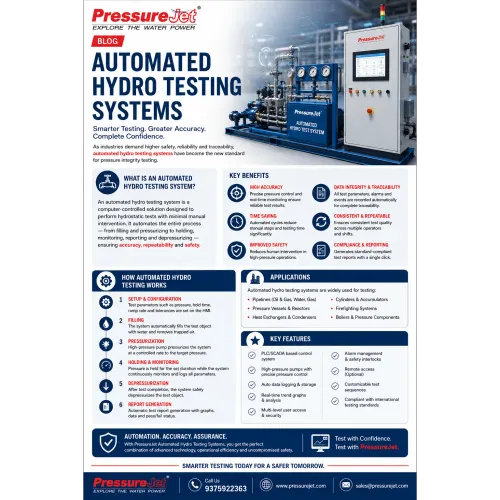
2. Advanced Automation
Modern stationary systems often include:
PLC controls
Digital monitoring
Automated pressure regulation
Data logging systems
Safety interlocks
Automation improves testing accuracy, repeatability, and operational safety.
3. Better Long-Term Productivity
For industries with frequent hydro testing requirements, stationary systems offer:
Faster throughput
Reduced manual intervention
Improved consistency
Lower labor dependency
These advantages support large-scale manufacturing efficiency.
4. Enhanced Safety Features
Stationary systems are often equipped with advanced safety mechanisms such as:
Pressure relief systems
Remote operation capability
Emergency shutdown controls
Integrated monitoring systems
This is especially important in high-pressure industrial testing environments.
Limitations of Stationary Systems
Stationary hydro test systems may involve:
Higher initial investment
Larger installation space
Permanent infrastructure requirements
Reduced mobility
They are best suited for facilities with ongoing, high-volume testing needs.
Portable vs Stationary Hydro Test Systems: Comparison Table
Feature Portable Units Stationary Systems
Mobility High Low
Installation Minimal Permanent
Automation Basic to Moderate Advanced
Pressure Capacity Moderate to High Very High
Best For Field Operations Industrial Production
Space Requirement Compact Larger
Initial Investment Lower Higher
Continuous Operation Limited Excellent
Which System Should You Choose?
The right hydro test solution depends on several factors:
Choose Portable Hydro Test Units If:
You require field mobility
Testing locations frequently change
Operations are project-based
Space is limited
Budget flexibility is important
Choose Stationary Hydro Test Systems If:
You perform frequent large-scale testing
Automation is required
Production efficiency is critical
High-pressure continuous operation is necessary
Long-term industrial usage is planned
Importance of Reliable Manufacturing
Whether selecting portable or stationary systems, build quality and engineering standards remain crucial.
A trusted manufacturer ensures:
Reliable pressure performance
Durable pump construction
Corrosion resistance
Safety compliance
Efficient maintenance support
PressureJet Systems Pvt. Ltd. is recognized for manufacturing advanced high-pressure hydro test solutions engineered for demanding industrial applications. Their expertise in both portable and stationary systems supports industries seeking dependable and efficient testing equipment.
Future Trends in Hydro Testing Equipment
The hydro testing industry is evolving with trends such as:
Smart digital monitoring
Remote-controlled testing
IoT-based diagnostics
Energy-efficient pump systems
Compact high-pressure designs
Manufacturers are increasingly focusing on combining portability with automation to create versatile next-generation hydro test systems.
Conclusion
Both portable hydro test units and stationary hydro test systems offer significant benefits depending on operational requirements. Portable units provide flexibility and mobility for field operations, while stationary systems deliver high-capacity, automated performance for industrial-scale testing.
Selecting the right system requires careful evaluation of testing frequency, pressure requirements, operational environment, and long-term productivity goals.
With strong engineering expertise and industrial-grade manufacturing, companies like PressureJet Systems Pvt. Ltd. continue to support industries with reliable hydro testing solutions tailored to modern industrial demands.
Hydrostatic testing is a critical process used across industries to verify the integrity, strength, and leak resistance of pipelines, pressure vessels, boilers, cylinders, valves, and other pressurized systems. Selecting the right hydro test equipment can significantly impact operational efficiency, safety, mobility, and maintenance costs.
One of the most common decisions industries face is choosing between portable hydro test units and stationary hydro test systems. Both solutions offer unique advantages depending on operational requirements, testing frequency, pressure range, and work environment.
Companies like PressureJet Systems Pvt. Ltd. provide advanced hydro testing solutions tailored for diverse industrial applications, helping organizations optimize testing performance and reliability.
Understanding Hydro Test Systems
Hydro test systems are designed to generate high-pressure water flow to test equipment under controlled pressure conditions. These systems ensure:
Leak detection
Structural integrity verification
Compliance with safety regulations
Pressure endurance validation
Depending on operational needs, industries may choose either:
Portable Hydro Test Units
Stationary Hydro Test Systems
Understanding the differences between these systems is essential for selecting the most efficient solution.
What Are Portable Hydro Test Units?
Portable hydro test units are compact, mobile pressure testing systems designed for field operations and on-site testing applications.
These units are commonly mounted on:
Skids
Trolleys
Portable frames
Compact wheeled assemblies
They are specifically engineered for applications where mobility and flexibility are important.
Key Advantages of Portable Hydro Test Units
1. Excellent Mobility
Portable systems can be easily transported to different job locations, making them ideal for:
Pipeline field testing
Offshore operations
Remote industrial sites
Construction projects
Maintenance shutdowns
This mobility reduces the need to move large equipment to testing facilities.
2. Faster On-Site Testing
Portable hydro test units allow technicians to conduct tests directly at the installation location, minimizing downtime and improving workflow efficiency.
Industries benefit from:
Reduced transportation costs
Faster commissioning
Quicker maintenance verification
Improved operational flexibility
3. Compact Design
Portable units are designed for space-saving operation and are suitable for confined or temporary workspaces.
This is especially useful in:
Shipyards
Refineries
Offshore platforms
Industrial plants with limited access areas
4. Lower Initial Infrastructure Requirements
Unlike stationary systems, portable units generally require less permanent infrastructure and installation work.
This makes them a cost-effective solution for:
Smaller operations
Contract testing services
Temporary projects
Mobile maintenance teams
Limitations of Portable Hydro Test Units
Despite their advantages, portable systems may have some limitations:
Lower pressure capacity in certain models
Limited automation features
Smaller fluid reservoir capacity
Less suitable for continuous large-scale operations
For heavy industrial testing environments, stationary systems may offer better long-term efficiency.
What Are Stationary Hydro Test Systems?
Stationary hydro test systems are permanently installed testing units designed for high-volume, repetitive, and industrial-scale pressure testing operations.
These systems are commonly integrated into:
Manufacturing plants
Production lines
Dedicated testing facilities
Industrial workshops
They are engineered for maximum performance, automation, and continuous operation.
Key Advantages of Stationary Hydro Test Systems
1. Higher Testing Capacity
Stationary systems are capable of handling:
Extremely high pressures
Large equipment volumes
Continuous testing operations
Multiple testing stations
This makes them ideal for industrial production environments.
2. Advanced Automation
Modern stationary systems often include:
PLC controls
Digital monitoring
Automated pressure regulation
Data logging systems
Safety interlocks
Automation improves testing accuracy, repeatability, and operational safety.
3. Better Long-Term Productivity
For industries with frequent hydro testing requirements, stationary systems offer:
Faster throughput
Reduced manual intervention
Improved consistency
Lower labor dependency
These advantages support large-scale manufacturing efficiency.
4. Enhanced Safety Features
Stationary systems are often equipped with advanced safety mechanisms such as:
Pressure relief systems
Remote operation capability
Emergency shutdown controls
Integrated monitoring systems
This is especially important in high-pressure industrial testing environments.
Limitations of Stationary Systems
Stationary hydro test systems may involve:
Higher initial investment
Larger installation space
Permanent infrastructure requirements
Reduced mobility
They are best suited for facilities with ongoing, high-volume testing needs.
Portable vs Stationary Hydro Test Systems: Comparison Table
Feature Portable Units Stationary Systems
Mobility High Low
Installation Minimal Permanent
Automation Basic to Moderate Advanced
Pressure Capacity Moderate to High Very High
Best For Field Operations Industrial Production
Space Requirement Compact Larger
Initial Investment Lower Higher
Continuous Operation Limited Excellent
Which System Should You Choose?
The right hydro test solution depends on several factors:
Choose Portable Hydro Test Units If:
You require field mobility
Testing locations frequently change
Operations are project-based
Space is limited
Budget flexibility is important
Choose Stationary Hydro Test Systems If:
You perform frequent large-scale testing
Automation is required
Production efficiency is critical
High-pressure continuous operation is necessary
Long-term industrial usage is planned
Importance of Reliable Manufacturing
Whether selecting portable or stationary systems, build quality and engineering standards remain crucial.
A trusted manufacturer ensures:
Reliable pressure performance
Durable pump construction
Corrosion resistance
Safety compliance
Efficient maintenance support
PressureJet Systems Pvt. Ltd. is recognized for manufacturing advanced high-pressure hydro test solutions engineered for demanding industrial applications. Their expertise in both portable and stationary systems supports industries seeking dependable and efficient testing equipment.
Future Trends in Hydro Testing Equipment
The hydro testing industry is evolving with trends such as:
Smart digital monitoring
Remote-controlled testing
IoT-based diagnostics
Energy-efficient pump systems
Compact high-pressure designs
Manufacturers are increasingly focusing on combining portability with automation to create versatile next-generation hydro test systems.
Conclusion
Both portable hydro test units and stationary hydro test systems offer significant benefits depending on operational requirements. Portable units provide flexibility and mobility for field operations, while stationary systems deliver high-capacity, automated performance for industrial-scale testing.
Selecting the right system requires careful evaluation of testing frequency, pressure requirements, operational environment, and long-term productivity goals.
With strong engineering expertise and industrial-grade manufacturing, companies like PressureJet Systems Pvt. Ltd. continue to support industries with reliable hydro testing solutions tailored to modern industrial demands.
Keywords