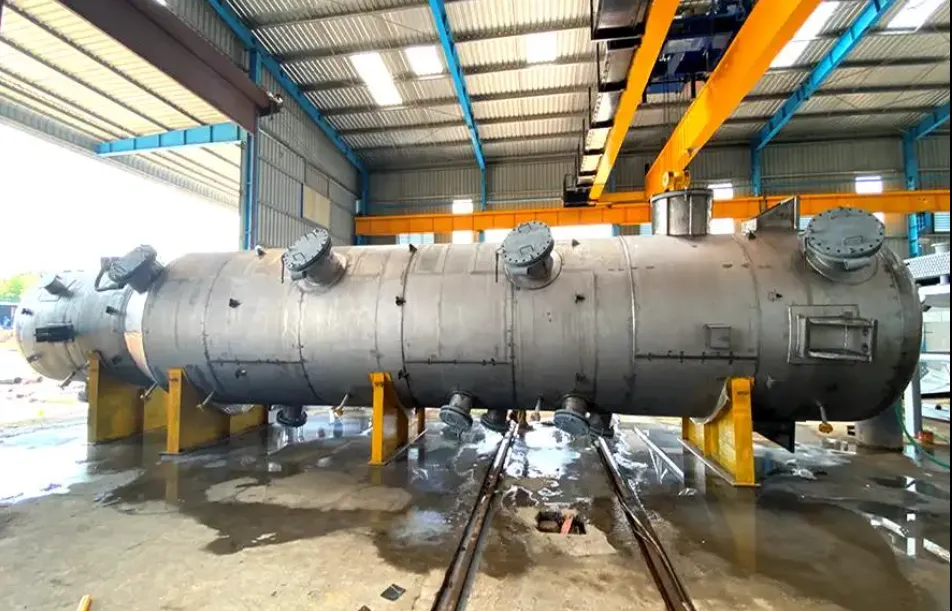
Pressure vessels are critical components in industries such as oil & gas, power generation, chemical processing, pharmaceuticals, and food manufacturing. Because they operate under high internal pressure, even a small defect can lead to serious safety hazards, production losses, and regulatory violations.
That is why hydro testing of pressure vessels is a mandatory and highly reliable method to verify their structural integrity before commissioning or after maintenance. Using high-pressure water and precision pumping systems, hydro testing helps ensure that pressure vessels can safely withstand operating conditions.
With advanced high-pressure pumping technology, PressureJet Systems Pvt. Ltd. provides dependable hydro test solutions for pressure vessel manufacturers, EPC contractors, and industrial plants across the globe.
What is Hydro Testing of Pressure Vessels?
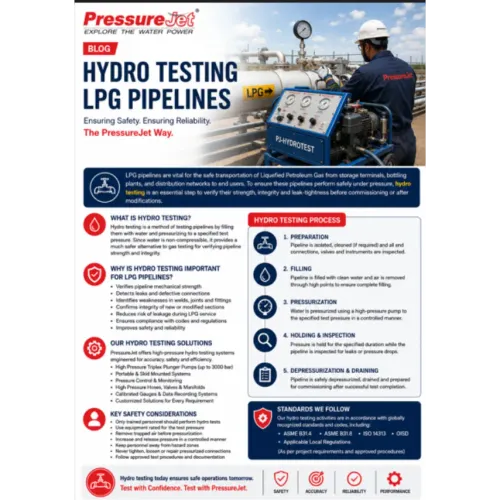
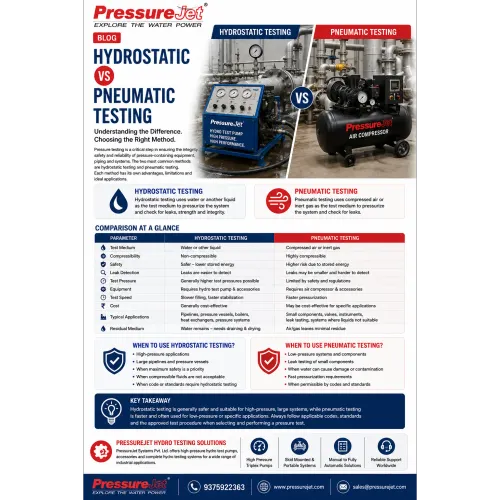
Hydro testing (or hydrostatic testing) is a non-destructive testing method in which a pressure vessel is filled with water and pressurized above its normal operating pressure to check for:
Leaks
Material defects
Weak welds
Structural deformation
Overall pressure-retaining capability
The test pressure is usually 1.3 to 1.5 times the vessel’s design pressure, depending on applicable standards such as ASME Section VIII or client specifications.
Why Hydro Testing is Essential
Pressure vessels store gases or liquids under pressure, making safety a top priority. Hydro testing helps:
Ensure Personnel Safety
Identifies defects before the vessel is put into operation, reducing the risk of catastrophic failure.
Meet Regulatory Requirements
Compliance with ASME, PED, and other international standards is often mandatory for certification and commissioning.
Validate Manufacturing Quality
Confirms the integrity of welds, joints, nozzles, and shell construction.
Reduce Operational Risk
Detects weaknesses early, preventing unplanned shutdowns, leaks, and costly repairs.
Build Customer Confidence
A successfully hydro-tested vessel demonstrates reliability and quality assurance to end users.
Typical Hydro Testing Procedure for Pressure Vessels
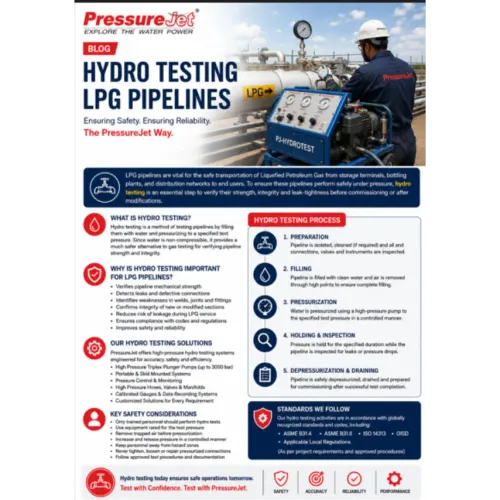
1. Pre-Test Inspection
Before testing, the vessel is inspected for:
Weld quality
Proper assembly
Valve and nozzle installation
Calibration of pressure gauges and instruments
2. Filling with Water
The vessel is completely filled with clean water while ensuring all air pockets are removed. Air removal is critical because trapped air can affect test accuracy and safety.
3. Pressurization
A high-pressure hydro test pump gradually raises the pressure to the specified test pressure. Controlled pressurization prevents sudden stress on the vessel.
4. Pressure Holding
The pressure is maintained for a defined period, during which inspectors monitor:
Pressure stability
Leakage
Weld integrity
Visible deformation or sweating
5. Inspection and Evaluation
All joints, weld seams, flanges, and nozzles are carefully inspected. Any pressure drop or leakage indicates a defect that must be repaired and retested.
6. Depressurization and Draining
After successful completion, pressure is safely released and the vessel is drained and dried as required.
The Role of High-Pressure Pumps in Pressure Vessel Testing
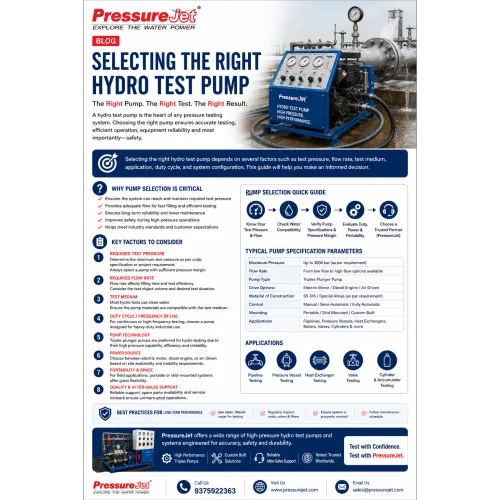
The accuracy and safety of hydro testing depend heavily on the performance of the pumping system. An ideal hydro test pump should provide:
Precise pressure control
Smooth and stable pressure build-up
High-pressure capability
Continuous-duty operation
Low maintenance and long service life
Inconsistent pressure can lead to false test results or unsafe testing conditions.
PressureJet Systems Pvt. Ltd. – Trusted Hydro Test Solutions
PressureJet Systems Pvt. Ltd. specializes in manufacturing high-pressure hydro test pumps and customized hydro testing systems for industrial applications.
Key Advantages of PressureJet Hydro Test Systems
1. High-Pressure Performance
PressureJet pumps are designed to generate the required pressures for testing small to large pressure vessels with accuracy and reliability.
2. Triplex Plunger Pump Technology
The company’s triplex plunger pumps offer:
Smooth flow with minimal pulsation
High volumetric efficiency
Long operational life
Excellent performance in continuous-duty applications
3. Portable and Skid-Mounted Units
PressureJet offers compact, mobile hydro test units that are ideal for fabrication shops, EPC sites, and plant maintenance operations.
4. Customized Engineering Solutions
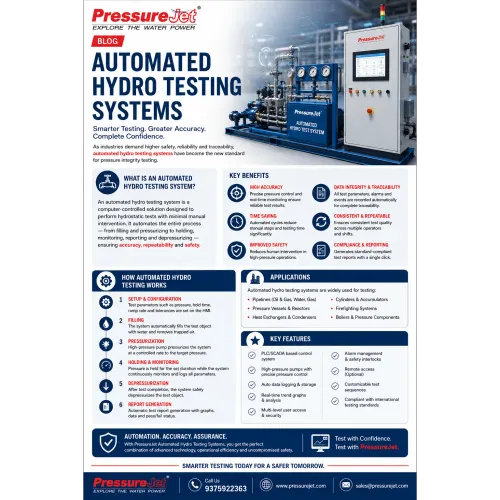
Every pressure vessel project is different. PressureJet can customize systems based on:
Required test pressure
Flow rate
Vessel volume
Automation level
Industry standards and client specifications
Industries Served
PressureJet hydro test solutions are widely used in:
Oil & Gas – Separators, reactors, storage vessels, and process equipment
Power Plants – Boilers, condensers, and high-pressure vessels
Chemical & Petrochemical – Reactors, heat exchangers, and process vessels
Pharmaceutical & Food Processing – Stainless steel pressure vessels and sanitary equipment
Fabrication & EPC Companies – Factory acceptance testing (FAT) and site commissioning
That is why hydro testing of pressure vessels is a mandatory and highly reliable method to verify their structural integrity before commissioning or after maintenance. Using high-pressure water and precision pumping systems, hydro testing helps ensure that pressure vessels can safely withstand operating conditions.
With advanced high-pressure pumping technology, PressureJet Systems Pvt. Ltd. provides dependable hydro test solutions for pressure vessel manufacturers, EPC contractors, and industrial plants across the globe.
What is Hydro Testing of Pressure Vessels?
Hydro testing (or hydrostatic testing) is a non-destructive testing method in which a pressure vessel is filled with water and pressurized above its normal operating pressure to check for:
Leaks
Material defects
Weak welds
Structural deformation
Overall pressure-retaining capability
The test pressure is usually 1.3 to 1.5 times the vessel’s design pressure, depending on applicable standards such as ASME Section VIII or client specifications.
Why Hydro Testing is Essential
Pressure vessels store gases or liquids under pressure, making safety a top priority. Hydro testing helps:
Ensure Personnel Safety
Identifies defects before the vessel is put into operation, reducing the risk of catastrophic failure.
Meet Regulatory Requirements
Compliance with ASME, PED, and other international standards is often mandatory for certification and commissioning.
Validate Manufacturing Quality
Confirms the integrity of welds, joints, nozzles, and shell construction.
Reduce Operational Risk
Detects weaknesses early, preventing unplanned shutdowns, leaks, and costly repairs.
Build Customer Confidence
A successfully hydro-tested vessel demonstrates reliability and quality assurance to end users.
Typical Hydro Testing Procedure for Pressure Vessels
1. Pre-Test Inspection
Before testing, the vessel is inspected for:
Weld quality
Proper assembly
Valve and nozzle installation
Calibration of pressure gauges and instruments
2. Filling with Water
The vessel is completely filled with clean water while ensuring all air pockets are removed. Air removal is critical because trapped air can affect test accuracy and safety.
3. Pressurization
A high-pressure hydro test pump gradually raises the pressure to the specified test pressure. Controlled pressurization prevents sudden stress on the vessel.
4. Pressure Holding
The pressure is maintained for a defined period, during which inspectors monitor:
Pressure stability
Leakage
Weld integrity
Visible deformation or sweating
5. Inspection and Evaluation
All joints, weld seams, flanges, and nozzles are carefully inspected. Any pressure drop or leakage indicates a defect that must be repaired and retested.
6. Depressurization and Draining
After successful completion, pressure is safely released and the vessel is drained and dried as required.
The Role of High-Pressure Pumps in Pressure Vessel Testing
The accuracy and safety of hydro testing depend heavily on the performance of the pumping system. An ideal hydro test pump should provide:
Precise pressure control
Smooth and stable pressure build-up
High-pressure capability
Continuous-duty operation
Low maintenance and long service life
Inconsistent pressure can lead to false test results or unsafe testing conditions.
PressureJet Systems Pvt. Ltd. – Trusted Hydro Test Solutions
PressureJet Systems Pvt. Ltd. specializes in manufacturing high-pressure hydro test pumps and customized hydro testing systems for industrial applications.
Key Advantages of PressureJet Hydro Test Systems
1. High-Pressure Performance
PressureJet pumps are designed to generate the required pressures for testing small to large pressure vessels with accuracy and reliability.
2. Triplex Plunger Pump Technology
The company’s triplex plunger pumps offer:
Smooth flow with minimal pulsation
High volumetric efficiency
Long operational life
Excellent performance in continuous-duty applications
3. Portable and Skid-Mounted Units
PressureJet offers compact, mobile hydro test units that are ideal for fabrication shops, EPC sites, and plant maintenance operations.
4. Customized Engineering Solutions
Every pressure vessel project is different. PressureJet can customize systems based on:
Required test pressure
Flow rate
Vessel volume
Automation level
Industry standards and client specifications
Industries Served
PressureJet hydro test solutions are widely used in:
Oil & Gas – Separators, reactors, storage vessels, and process equipment
Power Plants – Boilers, condensers, and high-pressure vessels
Chemical & Petrochemical – Reactors, heat exchangers, and process vessels
Pharmaceutical & Food Processing – Stainless steel pressure vessels and sanitary equipment
Fabrication & EPC Companies – Factory acceptance testing (FAT) and site commissioning
Keywords