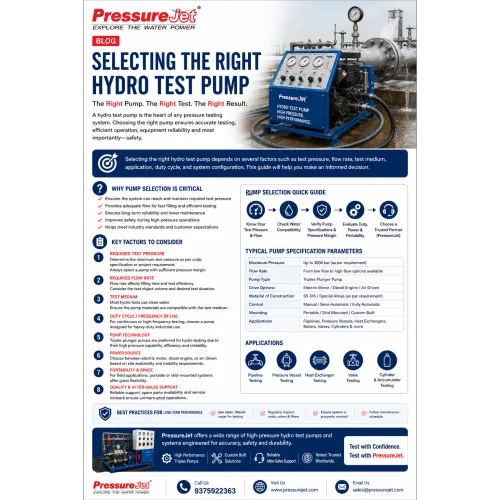


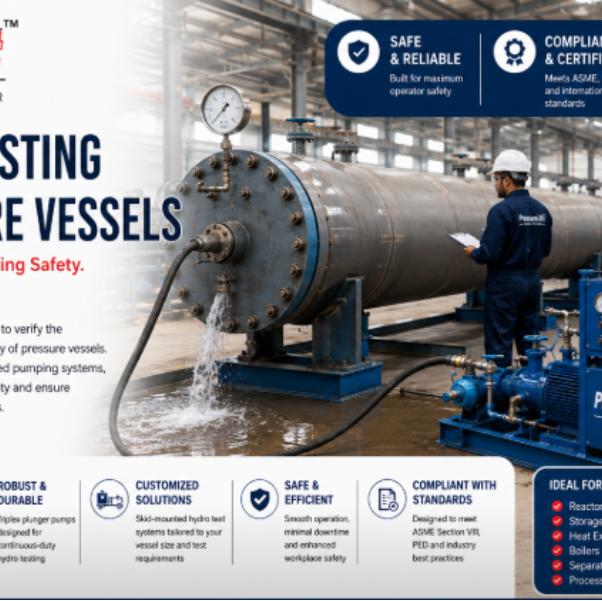
To achieve accurate and safe results, follow these best practices:
Use calibrated pressure gauges and recorders.
Remove all trapped air before pressurization.
Increase pressure gradually in controlled stages.
Maintain the specified holding time as per standards.
Inspect all welds and joints thoroughly during the test.
Use a reliable high-pressure pump with stable pressure output.
Follow ASME and site safety procedures strictly.
Common Challenges in Pressure Vessel Hydro Testing
Air Entrapment
Can cause inaccurate pressure readings and unsafe conditions.
Pressure Fluctuation
Often caused by inadequate pump performance or improper instrumentation.
Leakage at Temporary Connections
Poorly installed blinds, hoses, or fittings can lead to false failures.
Undersized Pumping Systems
Increase testing time and reduce efficiency, especially for large-volume vessels.
Why Choose PressureJet Systems Pvt. Ltd.?
PressureJet combines engineering expertise with robust manufacturing to deliver hydro test solutions that are:
Reliable and accurate
Built for heavy industrial use
Easy to operate and maintain
Customizable for specific applications
Supported by experienced technical teams
Whether you are testing a small fabricated vessel or a large industrial pressure system, PressureJet provides the performance and dependability required for critical testing operations.
Conclusion
Hydro testing of pressure vessels is a vital step in ensuring safety, compliance, and long-term operational reliability. The quality of the testing process depends not only on proper procedures but also on the reliability of the high-pressure pumping equipment used.
With its advanced triplex plunger pumps and customized hydro test systems, PressureJet Systems Pvt. Ltd. is a trusted partner for industries seeking efficient and dependable pressure vessel testing solutions.