Introduction
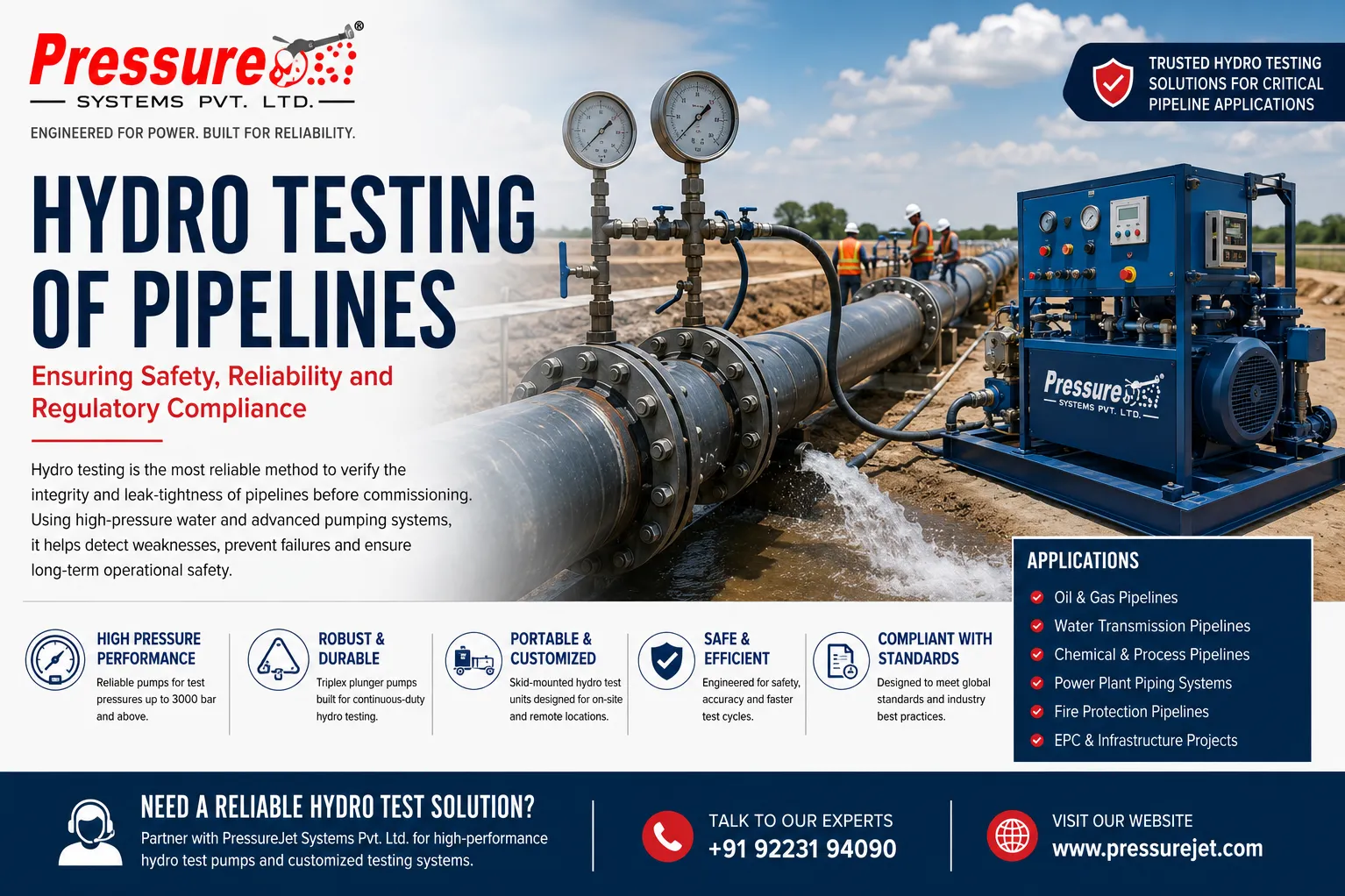
Pipeline networks are the backbone of industries such as oil & gas, power generation, water treatment, chemical processing, and infrastructure development. Before a pipeline is commissioned or returned to service after maintenance, it must be tested to verify its structural integrity and leak-tightness. One of the most reliable and widely accepted methods is hydrostatic testing (hydro testing).
Using high-pressure water and specialized pumping systems, hydro testing helps identify weaknesses, leaks, and defects before they become costly operational failures. With its range of high-pressure hydro test pumps and customized testing solutions, PressureJet Systems Pvt. Ltd. supports industries worldwide in conducting safe and efficient pipeline pressure testing.
What is Pipeline Hydro Testing?
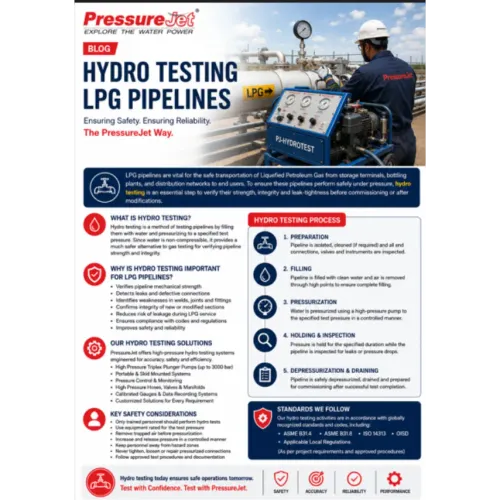
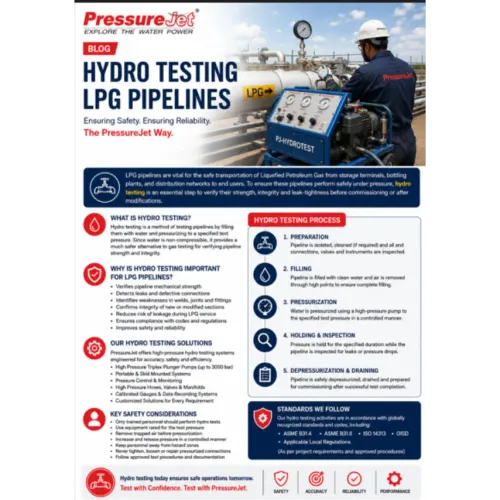
Hydro testing is a non-destructive testing method in which a pipeline is filled with water and pressurized above its normal operating pressure for a specified period.
The purpose of the test is to:
Verify mechanical integrity
Detect leaks and weak joints
Validate weld quality
Ensure compliance with industry standards
Confirm safe operation before commissioning
The test pressure is typically 1.25 to 1.5 times the design operating pressure, depending on applicable standards and project requirements.
Why Hydro Testing is Important
Failure of a pipeline can result in:
Product loss
Environmental damage
Safety hazards
Costly downtime
Regulatory penalties
Hydro testing helps operators identify defects before startup, reducing risk and improving long-term reliability.
Typical Hydro Testing Procedure
1. Pipeline Preparation
Before testing:
Visual inspection is conducted
Valves and fittings are checked
Temporary test blinds are installed
Pressure gauges are calibrated
2. Filling the Pipeline
The pipeline is filled completely with water while removing trapped air pockets.
3. Pressurization
A high-pressure pump gradually increases pressure to the specified test pressure.
4. Holding Period
Pressure is maintained for a defined duration while monitoring:
Pressure drop
Leakage
Structural deformation
5. Inspection and Evaluation
Engineers inspect all joints, welds, flanges, and valves to ensure no leakage or pressure loss occurs.
6. Depressurization and Draining
After successful completion, pressure is released safely and water is drained according to project requirements.
Role of High-Pressure Pumps in Pipeline Hydro Testing
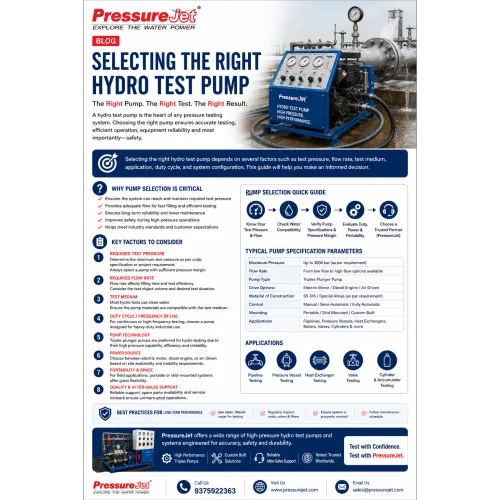
The success of any hydro test depends heavily on the reliability and performance of the pumping system.
An ideal hydro test pump should provide:
Accurate pressure control
Stable pressure output
High efficiency
Continuous-duty operation
Easy maintenance
Pressure fluctuations can compromise test accuracy and create safety concerns.
PressureJet Hydro Test Solutions
PressureJet Systems Pvt. Ltd. manufactures robust high-pressure pumping systems specifically designed for hydro testing applications.
Key advantages include:
High Pressure Capability
PressureJet pumps can generate the required test pressures for small, medium, and large pipeline projects.
Reliable Triplex Plunger Technology
Triplex plunger pumps provide:
Smooth flow
High efficiency
Long service life
Reduced maintenance
Portable Hydro Test Units
Compact and skid-mounted systems enable testing in remote project locations.
Customized Solutions
PressureJet offers systems tailored to:
Pipeline diameter
Test pressure requirements
Flow requirements
Industry-specific standards
Industries Using Pipeline Hydro Testing
Oil & Gas
Transmission pipelines
Gathering lines
Refinery piping
Water Infrastructure
Municipal water pipelines
Irrigation networks
Desalination projects
Power Plants
Cooling water systems
Boiler feed pipelines
Utility piping
Chemical Processing
Process pipelines
Transfer lines
Utility systems
Common Challenges During Hydro Testing
Air Entrapment
Trapped air can distort pressure readings and compromise test accuracy.
Pressure Loss
Often caused by:
Leaks
Temperature changes
Equipment issues
Inadequate Pump Capacity
Undersized pumps increase testing time and affect productivity.
Poor Instrumentation
Incorrect pressure measurements can lead to false test results.
Using a reliable hydro test system from PressureJet helps minimize these challenges.
Best Practices for Successful Pipeline Hydro Testing
Use calibrated pressure gauges
Remove all trapped air
Increase pressure gradually
Monitor pressure continuously
Follow applicable standards
Use properly sized high-pressure pumps
Maintain complete test documentation
Conclusion
Hydro testing remains the most trusted method for validating pipeline integrity before commissioning. A successful test depends not only on proper procedures but also on the reliability of the pumping equipment used.
With decades of expertise in high-pressure pumping technology, PressureJet Systems Pvt. Ltd. delivers dependable hydro test solutions that help industries ensure safety, compliance, and operational reliability.
Pipeline networks are the backbone of industries such as oil & gas, power generation, water treatment, chemical processing, and infrastructure development. Before a pipeline is commissioned or returned to service after maintenance, it must be tested to verify its structural integrity and leak-tightness. One of the most reliable and widely accepted methods is hydrostatic testing (hydro testing).
Using high-pressure water and specialized pumping systems, hydro testing helps identify weaknesses, leaks, and defects before they become costly operational failures. With its range of high-pressure hydro test pumps and customized testing solutions, PressureJet Systems Pvt. Ltd. supports industries worldwide in conducting safe and efficient pipeline pressure testing.
What is Pipeline Hydro Testing?
Hydro testing is a non-destructive testing method in which a pipeline is filled with water and pressurized above its normal operating pressure for a specified period.
The purpose of the test is to:
Verify mechanical integrity
Detect leaks and weak joints
Validate weld quality
Ensure compliance with industry standards
Confirm safe operation before commissioning
The test pressure is typically 1.25 to 1.5 times the design operating pressure, depending on applicable standards and project requirements.
Why Hydro Testing is Important
Failure of a pipeline can result in:
Product loss
Environmental damage
Safety hazards
Costly downtime
Regulatory penalties
Hydro testing helps operators identify defects before startup, reducing risk and improving long-term reliability.
Typical Hydro Testing Procedure
1. Pipeline Preparation
Before testing:
Visual inspection is conducted
Valves and fittings are checked
Temporary test blinds are installed
Pressure gauges are calibrated
2. Filling the Pipeline
The pipeline is filled completely with water while removing trapped air pockets.
3. Pressurization
A high-pressure pump gradually increases pressure to the specified test pressure.
4. Holding Period
Pressure is maintained for a defined duration while monitoring:
Pressure drop
Leakage
Structural deformation
5. Inspection and Evaluation
Engineers inspect all joints, welds, flanges, and valves to ensure no leakage or pressure loss occurs.
6. Depressurization and Draining
After successful completion, pressure is released safely and water is drained according to project requirements.
Role of High-Pressure Pumps in Pipeline Hydro Testing
The success of any hydro test depends heavily on the reliability and performance of the pumping system.
An ideal hydro test pump should provide:
Accurate pressure control
Stable pressure output
High efficiency
Continuous-duty operation
Easy maintenance
Pressure fluctuations can compromise test accuracy and create safety concerns.
PressureJet Hydro Test Solutions
PressureJet Systems Pvt. Ltd. manufactures robust high-pressure pumping systems specifically designed for hydro testing applications.
Key advantages include:
High Pressure Capability
PressureJet pumps can generate the required test pressures for small, medium, and large pipeline projects.
Reliable Triplex Plunger Technology
Triplex plunger pumps provide:
Smooth flow
High efficiency
Long service life
Reduced maintenance
Portable Hydro Test Units
Compact and skid-mounted systems enable testing in remote project locations.
Customized Solutions
PressureJet offers systems tailored to:
Pipeline diameter
Test pressure requirements
Flow requirements
Industry-specific standards
Industries Using Pipeline Hydro Testing
Oil & Gas
Transmission pipelines
Gathering lines
Refinery piping
Water Infrastructure
Municipal water pipelines
Irrigation networks
Desalination projects
Power Plants
Cooling water systems
Boiler feed pipelines
Utility piping
Chemical Processing
Process pipelines
Transfer lines
Utility systems
Common Challenges During Hydro Testing
Air Entrapment
Trapped air can distort pressure readings and compromise test accuracy.
Pressure Loss
Often caused by:
Leaks
Temperature changes
Equipment issues
Inadequate Pump Capacity
Undersized pumps increase testing time and affect productivity.
Poor Instrumentation
Incorrect pressure measurements can lead to false test results.
Using a reliable hydro test system from PressureJet helps minimize these challenges.
Best Practices for Successful Pipeline Hydro Testing
Use calibrated pressure gauges
Remove all trapped air
Increase pressure gradually
Monitor pressure continuously
Follow applicable standards
Use properly sized high-pressure pumps
Maintain complete test documentation
Conclusion
Hydro testing remains the most trusted method for validating pipeline integrity before commissioning. A successful test depends not only on proper procedures but also on the reliability of the pumping equipment used.
With decades of expertise in high-pressure pumping technology, PressureJet Systems Pvt. Ltd. delivers dependable hydro test solutions that help industries ensure safety, compliance, and operational reliability.
Keywords