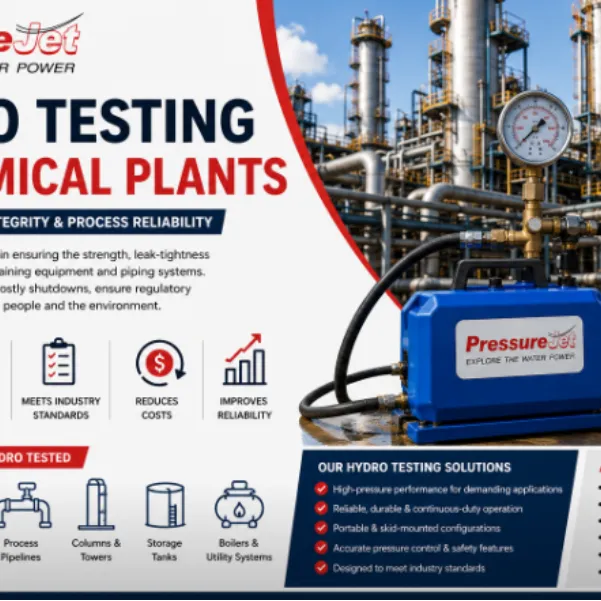
Chemical plants operate under demanding conditions involving high pressures, corrosive chemicals, elevated temperatures, and continuous production cycles. The integrity of pressure-containing equipment and piping systems is critical to ensuring safe operations, regulatory compliance, and uninterrupted production.
One of the most effective methods for verifying the strength and leak-tightness of these systems is Hydro Testing (Hydrostatic Testing). At PressureJet Systems Pvt. Ltd., we provide advanced hydro testing solutions that help chemical industries maintain the highest standards of safety, reliability, and operational excellence.
What is Hydro Testing?
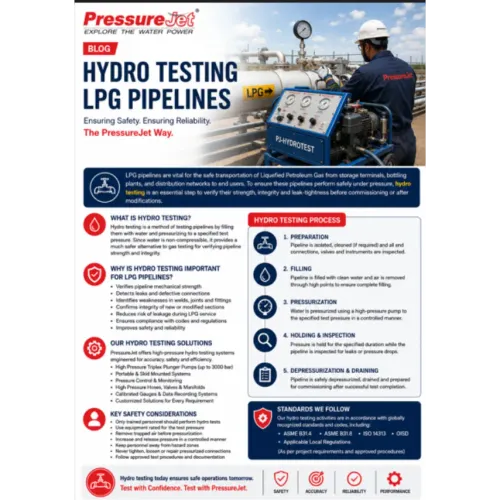
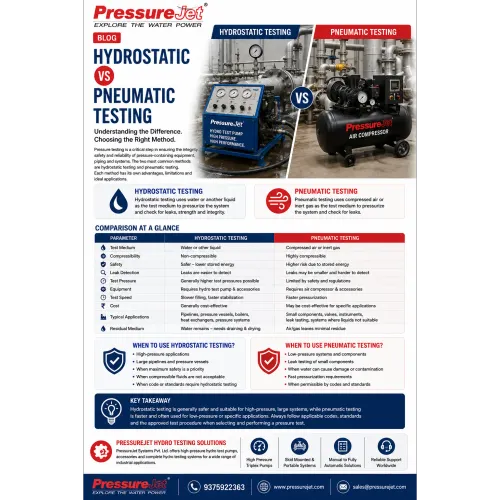
Hydro Testing is a non-destructive testing (NDT) method used to verify the pressure integrity of equipment, vessels, pipelines, and process systems by filling them with water and pressurizing them above their normal operating pressure.
The test helps identify:
Leakage points
Weak weld joints
Material defects
Structural weaknesses
Manufacturing flaws
Because water is nearly incompressible, hydro testing is considered one of the safest and most reliable methods for pressure verification.
Why Hydro Testing is Essential in Chemical Plants
Chemical processing facilities handle hazardous, toxic, flammable, and corrosive substances. Even a small leak can result in:
Product loss
Environmental contamination
Safety hazards
Regulatory penalties
Unplanned shutdowns
Hydro testing helps detect defects before systems are commissioned or returned to service.
Key Benefits
1. Ensures Plant Safety
Verifies equipment integrity before exposure to hazardous chemicals.
2. Prevents Product Loss
Detects leaks that could lead to material wastage and contamination.
3. Reduces Downtime
Identifies defects during maintenance rather than during production.
4. Meets Regulatory Requirements
Supports compliance with international codes and safety regulations.
5. Improves Equipment Reliability
Extends service life and minimizes unexpected failures.
Equipment Commonly Hydro Tested in Chemical Plants
Pressure Vessels
Reactors
Storage vessels
Mixing tanks
Separators
Heat Exchangers
Shell & tube exchangers
Plate heat exchangers
Condensers
Reboilers
Process Pipelines
Chemical transfer lines
Utility piping
Steam lines
Cooling water systems
Columns and Towers
Distillation columns
Absorption towers
Stripping columns
Boilers and Utility Systems
Steam generation systems
Feedwater systems
Condensate recovery systems
Hydro Testing Procedure
Step 1: System Preparation
Isolate equipment from the process system
Install calibrated pressure gauges
Verify all connections and supports
Step 2: Filling with Water
The system is completely filled with clean water while ensuring removal of all trapped air.
Step 3: Controlled Pressurization
Using a hydro test pump, pressure is gradually increased to the specified test pressure, typically 1.3 to 1.5 times the design pressure as required by applicable standards.
Step 4: Pressure Holding
The test pressure is maintained for a specified duration while inspecting:
Weld seams
Flanges
Gaskets
Valves
Instrument connections
Step 5: Inspection and Documentation
Test results are documented for quality assurance and regulatory compliance.
Challenges in Chemical Plant Hydro Testing
Corrosive Environments
Testing equipment must withstand harsh plant conditions.
High Test Pressures
Many chemical processes require testing at elevated pressures.
Large Process Networks
Extensive piping systems require high-capacity pumping solutions.
Tight Shutdown Schedules
Maintenance teams must complete testing within limited turnaround periods.
Safety Requirements
Strict procedures must be followed to protect personnel and assets.
PressureJet Hydro Testing Solutions for Chemical Plants
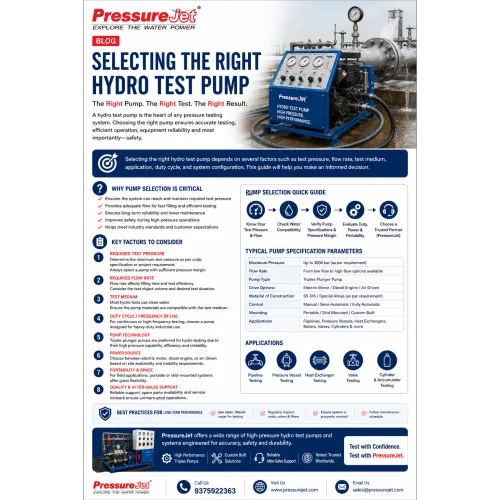
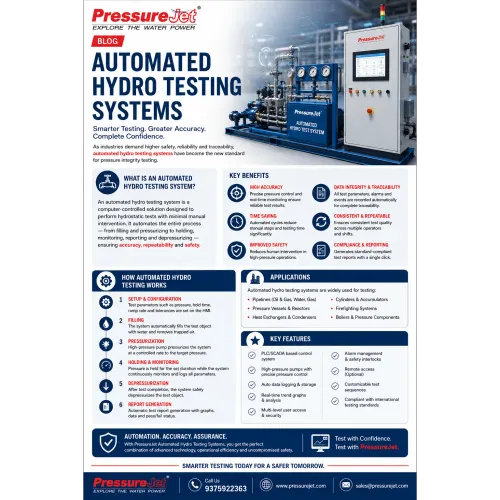
PressureJet Systems Pvt. Ltd. manufactures robust hydro test systems designed for demanding industrial environments.
Features of PressureJet Hydro Test Pumps
✔ High-pressure capability for critical applications
✔ Reliable triplex plunger pump technology
✔ Continuous-duty operation
✔ Precise pressure control
✔ Portable and skid-mounted configurations
✔ Electric and diesel-driven options
✔ Rugged industrial construction
✔ Low maintenance requirements
One of the most effective methods for verifying the strength and leak-tightness of these systems is Hydro Testing (Hydrostatic Testing). At PressureJet Systems Pvt. Ltd., we provide advanced hydro testing solutions that help chemical industries maintain the highest standards of safety, reliability, and operational excellence.
What is Hydro Testing?
Hydro Testing is a non-destructive testing (NDT) method used to verify the pressure integrity of equipment, vessels, pipelines, and process systems by filling them with water and pressurizing them above their normal operating pressure.
The test helps identify:
Leakage points
Weak weld joints
Material defects
Structural weaknesses
Manufacturing flaws
Because water is nearly incompressible, hydro testing is considered one of the safest and most reliable methods for pressure verification.
Why Hydro Testing is Essential in Chemical Plants
Chemical processing facilities handle hazardous, toxic, flammable, and corrosive substances. Even a small leak can result in:
Product loss
Environmental contamination
Safety hazards
Regulatory penalties
Unplanned shutdowns
Hydro testing helps detect defects before systems are commissioned or returned to service.
Key Benefits
1. Ensures Plant Safety
Verifies equipment integrity before exposure to hazardous chemicals.
2. Prevents Product Loss
Detects leaks that could lead to material wastage and contamination.
3. Reduces Downtime
Identifies defects during maintenance rather than during production.
4. Meets Regulatory Requirements
Supports compliance with international codes and safety regulations.
5. Improves Equipment Reliability
Extends service life and minimizes unexpected failures.
Equipment Commonly Hydro Tested in Chemical Plants
Pressure Vessels
Reactors
Storage vessels
Mixing tanks
Separators
Heat Exchangers
Shell & tube exchangers
Plate heat exchangers
Condensers
Reboilers
Process Pipelines
Chemical transfer lines
Utility piping
Steam lines
Cooling water systems
Columns and Towers
Distillation columns
Absorption towers
Stripping columns
Boilers and Utility Systems
Steam generation systems
Feedwater systems
Condensate recovery systems
Hydro Testing Procedure
Step 1: System Preparation
Isolate equipment from the process system
Install calibrated pressure gauges
Verify all connections and supports
Step 2: Filling with Water
The system is completely filled with clean water while ensuring removal of all trapped air.
Step 3: Controlled Pressurization
Using a hydro test pump, pressure is gradually increased to the specified test pressure, typically 1.3 to 1.5 times the design pressure as required by applicable standards.
Step 4: Pressure Holding
The test pressure is maintained for a specified duration while inspecting:
Weld seams
Flanges
Gaskets
Valves
Instrument connections
Step 5: Inspection and Documentation
Test results are documented for quality assurance and regulatory compliance.
Challenges in Chemical Plant Hydro Testing
Corrosive Environments
Testing equipment must withstand harsh plant conditions.
High Test Pressures
Many chemical processes require testing at elevated pressures.
Large Process Networks
Extensive piping systems require high-capacity pumping solutions.
Tight Shutdown Schedules
Maintenance teams must complete testing within limited turnaround periods.
Safety Requirements
Strict procedures must be followed to protect personnel and assets.
PressureJet Hydro Testing Solutions for Chemical Plants
PressureJet Systems Pvt. Ltd. manufactures robust hydro test systems designed for demanding industrial environments.
Features of PressureJet Hydro Test Pumps
✔ High-pressure capability for critical applications
✔ Reliable triplex plunger pump technology
✔ Continuous-duty operation
✔ Precise pressure control
✔ Portable and skid-mounted configurations
✔ Electric and diesel-driven options
✔ Rugged industrial construction
✔ Low maintenance requirements
Keywords