

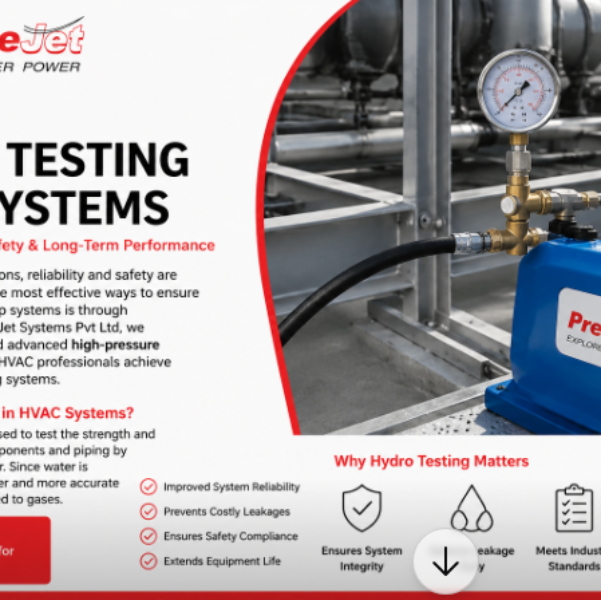
Modern HVAC (Heating, Ventilation, and Air Conditioning) systems are critical for maintaining comfortable, safe, and energy-efficient environments in commercial buildings, industrial facilities, hospitals, data centers, and residential complexes. The performance and longevity of these systems depend heavily on the integrity of their piping networks and pressure-containing components. This is where Hydro Testing plays a vital role.
At PressureJet Systems Pvt. Ltd., we provide advanced hydro testing solutions designed to ensure leak-free operation, structural integrity, and long-term reliability of HVAC systems.
What is Hydro Testing?
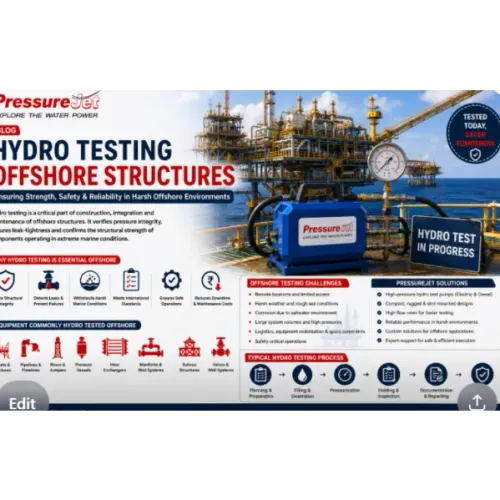
Hydro Testing, also known as Hydrostatic Testing, is a non-destructive testing method used to verify the strength and leak-tightness of piping systems, coils, heat exchangers, valves, and pressure vessels.
The process involves:
Filling the system with water.
Removing trapped air.
Pressurizing the system to a specified test pressure.
Monitoring pressure stability and inspecting for leaks.
Because water is virtually incompressible, hydro testing is one of the safest and most reliable methods for validating HVAC system integrity.
Why Hydro Testing is Essential for HVAC Systems
1. Detects Leaks Before Commissioning
Even minor leaks can lead to:
Reduced cooling or heating efficiency
Water damage to infrastructure
Increased maintenance costs
Energy losses
Hydro testing identifies leaks before the system becomes operational.
2. Verifies Mechanical Strength
HVAC piping networks experience varying pressure conditions during operation. Hydro testing confirms that:
Pipes can withstand operating pressures
Weld joints are secure
Flanges and fittings are leak-free
Valves function correctly
3. Ensures Compliance with Industry Standards
Many international and local standards require pressure testing before system commissioning, including:
ASME Standards
ANSI Requirements
HVAC Installation Codes
Project-Specific Specifications
4. Improves System Reliability
Properly tested systems experience:
Fewer breakdowns
Lower maintenance costs
Longer service life
Higher operational efficiency
Typical HVAC Components Tested
Hydro testing is commonly performed on:
Chilled Water Pipelines
Condenser Water Lines
Hot Water Systems
Cooling Coils
Heat Exchangers
Pressure Vessels
Expansion Tanks
HVAC Skids
Industrial Process Cooling Systems
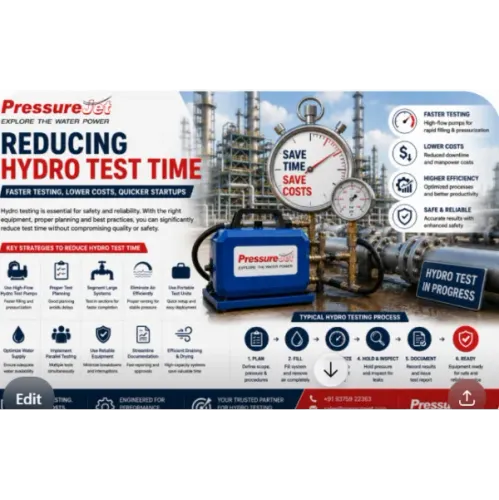
Hydro Testing Procedure for HVAC Systems
Step 1: System Preparation
Visual inspection of piping and joints
Installation of test gauges
Isolation of sensitive equipment
Step 2: Filling with Water
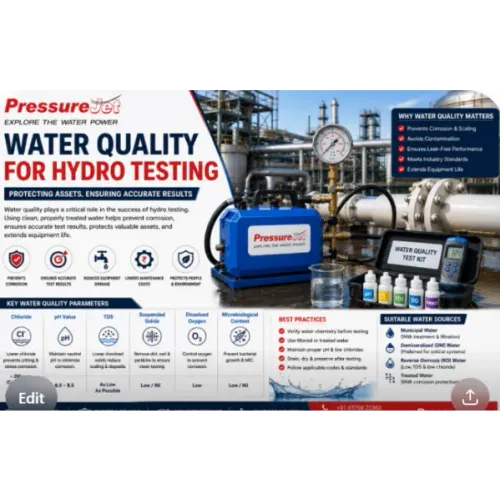
The system is completely filled with clean water while removing trapped air pockets.
Step 3: Pressurization
Using a hydro test pump, pressure is gradually increased to the specified test pressure, typically 1.5 times the design pressure.
Step 4: Pressure Holding Period
The pressure is maintained for a predetermined duration while monitoring for:
Pressure drops
Visible leakage
Structural deformation
Step 5: Documentation
Test results are recorded and certified for quality assurance and project compliance.
Common Challenges During HVAC Hydro Testing
Air Entrapment
Air pockets can produce inaccurate results and unstable pressure readings.
Large Network Volumes
Commercial buildings often contain extensive piping systems requiring high-capacity hydro test equipment.
Pressure Stability
Maintaining consistent pressure over long test durations requires reliable pumping systems.
Tight Project Deadlines
Construction schedules demand fast and dependable testing solutions.
How PressureJet Systems Adds Value
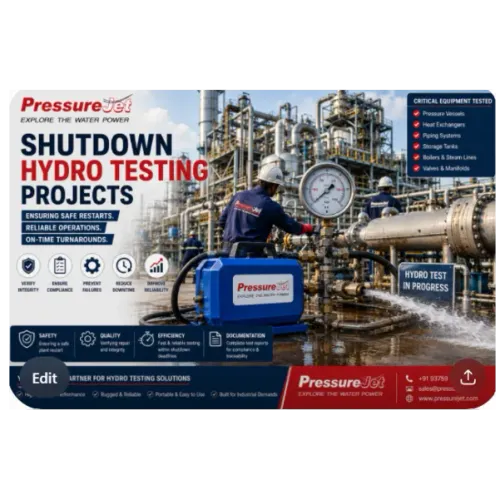
PressureJet Systems Pvt. Ltd. manufactures and supplies advanced hydro test pumps specifically engineered for industrial and HVAC applications.
Key Advantages of PressureJet Hydro Test Systems
✔ Accurate pressure generation and control
✔ Rugged construction for continuous operation
✔ Portable and skid-mounted options
✔ Suitable for low and high-pressure testing
✔ Easy maintenance and operation
✔ Reliable performance in field conditions
✔ Compliance with international testing standards
Our hydro test systems are trusted across industries including:
HVAC & Building Services
Oil & Gas
Power Plants
Refineries
Chemical Processing
Manufacturing Facilities
Infrastructure Projects
Benefits of Hydro Testing HVAC Systems
Benefit Impact
Leak Detection Prevents costly failures
Safety Assurance Reduces operational risks
Compliance Meets project specifications
Reliability Improves system uptime
Cost Savings Minimizes repair expenses
Performance Optimization Enhances HVAC efficiency
Choosing the Right Hydro Test Pump
When selecting a hydro testing system, consider:
Required test pressure
Flow rate requirements
System volume
Portability needs
Power availability
Testing standards
PressureJet engineers assist customers in selecting the ideal hydro test solution based on their HVAC project requirements.
Conclusion
Hydro testing is a critical quality assurance step that ensures HVAC systems operate safely, efficiently, and reliably throughout their service life. By identifying weaknesses and leaks before commissioning, hydro testing protects both equipment and infrastructure while reducing future maintenance costs.