PressureJet Systems Pvt. Ltd.
Optimizing Hydro Testing Performance with the Right Pressure and Flow Selection
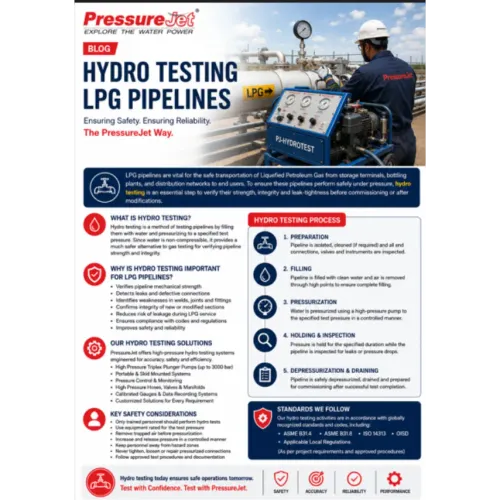
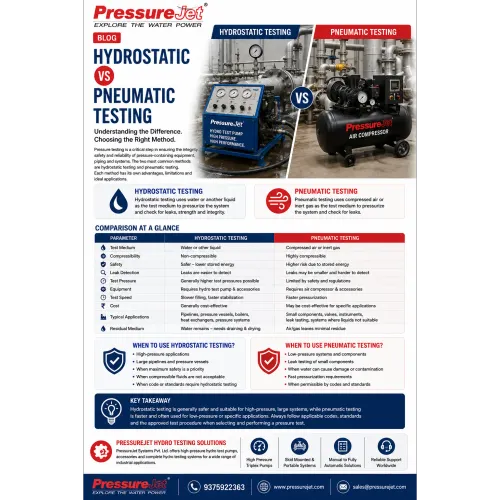
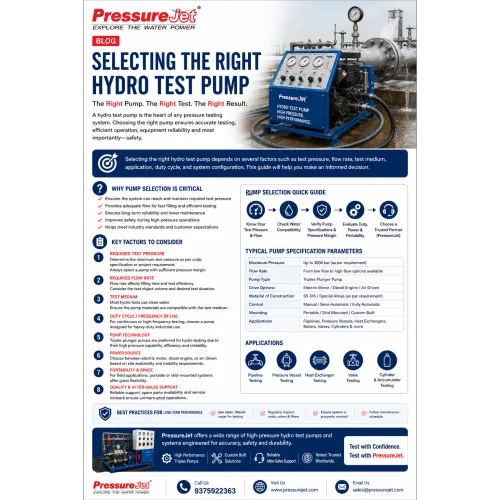
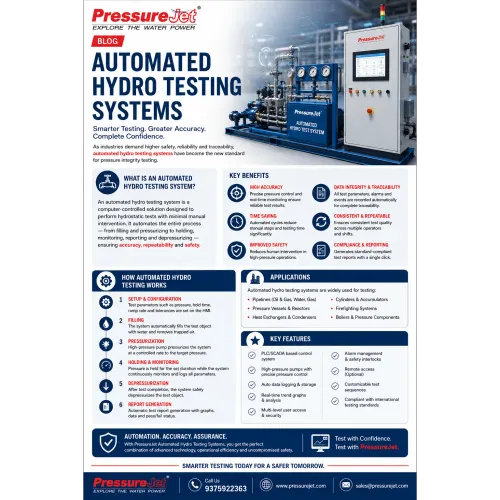
Hydro testing is one of the most important procedures used to verify the strength, integrity, and leak-tightness of pipelines, pressure vessels, valves, boilers, heat exchangers, and industrial systems. However, the success and safety of hydro testing largely depend on selecting the correct pressure and flow combination.
Many industries focus only on achieving high pressure during testing, but in reality, both pressure and flow rate must be properly balanced to ensure accurate results, equipment safety, and operational efficiency.
At PressureJet Systems Pvt. Ltd., we specialize in designing high-performance hydro testing systems that deliver the ideal combination of pressure, flow, reliability, and safety for demanding industrial applications.
Understanding Pressure and Flow in Hydro Testing
Before selecting a hydro testing system, it is important to understand the difference between pressure and flow.
What is Pressure?
Pressure refers to the force applied by the fluid inside the system being tested and is generally measured in:
Bar
PSI
MPa
In hydro testing, pressure is used to:
Verify structural strength
Detect leaks
Confirm system integrity
Ensure compliance with safety standards
What is Flow Rate?
Flow rate refers to the quantity of water delivered by the pump over a specific time period and is measured in:
LPM (Liters Per Minute)
GPM (Gallons Per Minute)
Flow determines:
Filling speed of the system
Testing cycle duration
Pumping efficiency
Overall productivity
Why Correct Pressure Selection is Important
Selecting incorrect test pressure can lead to:
Unsafe operating conditions
Equipment damage
Inaccurate test results
Excessive stress on components
Test failures
Proper pressure selection ensures safe and reliable hydro testing performance.
Factors to Consider While Selecting Hydro Test Pressure
1. Operating Pressure of Equipment
Hydro test pressure is generally higher than the normal operating pressure of the equipment.
In many applications:
Hydro test pressure is approximately 1.3 to 1.5 times the operating pressure.
For example:
If a pipeline operates at 100 bar, hydro testing may be conducted around:
150 bar
depending on applicable industry standards.
2. Industry Standards and Codes
Pressure selection must comply with standards such as:
ASME
API
ISO
ASTM
Customer specifications
Different industries have different testing requirements.
3. Material Strength
The material of the equipment being tested plays a major role in determining safe test pressure.
Factors include:
Yield strength
Wall thickness
Corrosion condition
Design limitations
Older or corroded systems may require controlled pressure limits.
4. Safety Considerations
Over-pressurization can create hazardous conditions including:
Pipe rupture
Seal failure
Equipment damage
Operator risk
PressureJet hydro testing systems are equipped with advanced safety controls to maintain safe testing conditions.
Why Correct Flow Selection Matters
While pressure verifies strength, flow determines testing efficiency and system filling speed.
Improper flow selection may cause:
Longer testing cycles
Slow pressurization
Excessive pump loading
Inefficient operation
Factors to Consider While Selecting Flow Rate
1. Volume of the System
Large pipelines or vessels require higher flow rates to reduce filling time.
Examples:
Small valves may require low flow
Long pipelines require high flow capacity
PressureJet designs customized systems based on application volume requirements.
2. Required Testing Time
Faster project completion often requires higher flow rates for quick filling and pressurization.
High flow systems help:
Reduce downtime
Improve productivity
Increase operational efficiency
3. Test Medium
The viscosity and characteristics of the testing fluid can affect flow performance.
Water is commonly used because it:
Is incompressible
Is safer than gases
Provides stable pressure transmission
4. Pressure and Flow Balance
In hydro testing, pressure and flow are interconnected.
High pressure with insufficient flow may:
Increase testing time
Create unstable pressure conditions
High flow with improper pressure control may:
Damage equipment
Cause pressure surges
PressureJet systems are engineered to provide an optimized pressure-flow combination for stable performance.
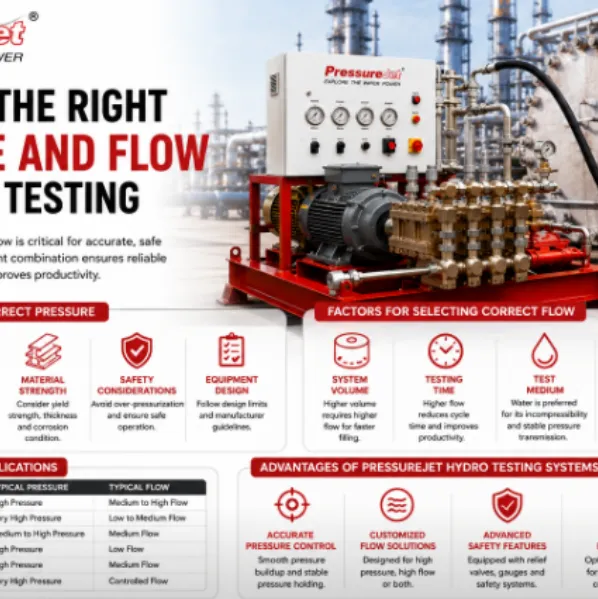
Common Hydro Testing Applications and Requirements
Application Typical Pressure Requirement Typical Flow Requirement
Pipeline Testing High Pressure Medium to High Flow
Boiler Tube Testing Very High Pressure Low to Medium Flow
Heat Exchanger Testing Medium to High Pressure Medium Flow
Valve Testing High Pressure Low Flow
Pressure Vessel Testing High Pressure Medium Flow
Offshore Equipment Testing Very High Pressure Controlled Flow
Advantages of PressureJet Hydro Testing Systems
Accurate Pressure Control
PressureJet systems provide:
Smooth pressure buildup
Stable pressure holding
Controlled operation
This improves testing accuracy and safety.
Customized Flow Configurations
We offer hydro testing systems designed specifically for:
High-pressure applications
High-flow applications
Combined pressure-flow requirements
Advanced Safety Features
PressureJet systems include:
Pressure relief valves
Safety bypass systems
Pressure gauges
Emergency shutdown systems
These features help prevent unsafe operating conditions.
Energy Efficient Performance
Optimized pump design ensures:
Lower energy consumption
Reduced operational cost
Higher efficiency
Heavy-Duty Industrial Construction
Our systems are built for:
Continuous industrial operation
Long service life
Low maintenance
Reliable performance
Why Industries Choose PressureJet Systems Pvt. Ltd.
PressureJet Systems Pvt. Ltd. is one of India’s leading manufacturers of high pressure plunger pumps and hydro testing systems trusted across industries worldwide.
Our strengths include:
Advanced engineering expertise
Customized hydro testing solutions
High reliability
Superior quality components
Strong after-sales support
Proven industrial performance
We help industries select the most suitable pressure and flow combination for safe, efficient, and accurate hydro testing operations.
Conclusion
Selecting the right pressure and flow is essential for successful hydro testing. A properly designed hydro testing system not only ensures accurate leak detection and structural verification but also improves safety, efficiency, and equipment reliability.
At PressureJet Systems Pvt. Ltd., we provide advanced hydro testing systems engineered to deliver the ideal balance of pressure, flow, durability, and safety for demanding industrial applications.
Whether you require hydro testing for pipelines, pressure vessels, valves, boilers, or offshore systems, PressureJet offers dependable solutions tailored to your operational requirements.
Optimizing Hydro Testing Performance with the Right Pressure and Flow Selection
Hydro testing is one of the most important procedures used to verify the strength, integrity, and leak-tightness of pipelines, pressure vessels, valves, boilers, heat exchangers, and industrial systems. However, the success and safety of hydro testing largely depend on selecting the correct pressure and flow combination.
Many industries focus only on achieving high pressure during testing, but in reality, both pressure and flow rate must be properly balanced to ensure accurate results, equipment safety, and operational efficiency.
At PressureJet Systems Pvt. Ltd., we specialize in designing high-performance hydro testing systems that deliver the ideal combination of pressure, flow, reliability, and safety for demanding industrial applications.
Understanding Pressure and Flow in Hydro Testing
Before selecting a hydro testing system, it is important to understand the difference between pressure and flow.
What is Pressure?
Pressure refers to the force applied by the fluid inside the system being tested and is generally measured in:
Bar
PSI
MPa
In hydro testing, pressure is used to:
Verify structural strength
Detect leaks
Confirm system integrity
Ensure compliance with safety standards
What is Flow Rate?
Flow rate refers to the quantity of water delivered by the pump over a specific time period and is measured in:
LPM (Liters Per Minute)
GPM (Gallons Per Minute)
Flow determines:
Filling speed of the system
Testing cycle duration
Pumping efficiency
Overall productivity
Why Correct Pressure Selection is Important
Selecting incorrect test pressure can lead to:
Unsafe operating conditions
Equipment damage
Inaccurate test results
Excessive stress on components
Test failures
Proper pressure selection ensures safe and reliable hydro testing performance.
Factors to Consider While Selecting Hydro Test Pressure
1. Operating Pressure of Equipment
Hydro test pressure is generally higher than the normal operating pressure of the equipment.
In many applications:
Hydro test pressure is approximately 1.3 to 1.5 times the operating pressure.
For example:
If a pipeline operates at 100 bar, hydro testing may be conducted around:
150 bar
depending on applicable industry standards.
2. Industry Standards and Codes
Pressure selection must comply with standards such as:
ASME
API
ISO
ASTM
Customer specifications
Different industries have different testing requirements.
3. Material Strength
The material of the equipment being tested plays a major role in determining safe test pressure.
Factors include:
Yield strength
Wall thickness
Corrosion condition
Design limitations
Older or corroded systems may require controlled pressure limits.
4. Safety Considerations
Over-pressurization can create hazardous conditions including:
Pipe rupture
Seal failure
Equipment damage
Operator risk
PressureJet hydro testing systems are equipped with advanced safety controls to maintain safe testing conditions.
Why Correct Flow Selection Matters
While pressure verifies strength, flow determines testing efficiency and system filling speed.
Improper flow selection may cause:
Longer testing cycles
Slow pressurization
Excessive pump loading
Inefficient operation
Factors to Consider While Selecting Flow Rate
1. Volume of the System
Large pipelines or vessels require higher flow rates to reduce filling time.
Examples:
Small valves may require low flow
Long pipelines require high flow capacity
PressureJet designs customized systems based on application volume requirements.
2. Required Testing Time
Faster project completion often requires higher flow rates for quick filling and pressurization.
High flow systems help:
Reduce downtime
Improve productivity
Increase operational efficiency
3. Test Medium
The viscosity and characteristics of the testing fluid can affect flow performance.
Water is commonly used because it:
Is incompressible
Is safer than gases
Provides stable pressure transmission
4. Pressure and Flow Balance
In hydro testing, pressure and flow are interconnected.
High pressure with insufficient flow may:
Increase testing time
Create unstable pressure conditions
High flow with improper pressure control may:
Damage equipment
Cause pressure surges
PressureJet systems are engineered to provide an optimized pressure-flow combination for stable performance.
Common Hydro Testing Applications and Requirements
Application Typical Pressure Requirement Typical Flow Requirement
Pipeline Testing High Pressure Medium to High Flow
Boiler Tube Testing Very High Pressure Low to Medium Flow
Heat Exchanger Testing Medium to High Pressure Medium Flow
Valve Testing High Pressure Low Flow
Pressure Vessel Testing High Pressure Medium Flow
Offshore Equipment Testing Very High Pressure Controlled Flow
Advantages of PressureJet Hydro Testing Systems
Accurate Pressure Control
PressureJet systems provide:
Smooth pressure buildup
Stable pressure holding
Controlled operation
This improves testing accuracy and safety.
Customized Flow Configurations
We offer hydro testing systems designed specifically for:
High-pressure applications
High-flow applications
Combined pressure-flow requirements
Advanced Safety Features
PressureJet systems include:
Pressure relief valves
Safety bypass systems
Pressure gauges
Emergency shutdown systems
These features help prevent unsafe operating conditions.
Energy Efficient Performance
Optimized pump design ensures:
Lower energy consumption
Reduced operational cost
Higher efficiency
Heavy-Duty Industrial Construction
Our systems are built for:
Continuous industrial operation
Long service life
Low maintenance
Reliable performance
Why Industries Choose PressureJet Systems Pvt. Ltd.
PressureJet Systems Pvt. Ltd. is one of India’s leading manufacturers of high pressure plunger pumps and hydro testing systems trusted across industries worldwide.
Our strengths include:
Advanced engineering expertise
Customized hydro testing solutions
High reliability
Superior quality components
Strong after-sales support
Proven industrial performance
We help industries select the most suitable pressure and flow combination for safe, efficient, and accurate hydro testing operations.
Conclusion
Selecting the right pressure and flow is essential for successful hydro testing. A properly designed hydro testing system not only ensures accurate leak detection and structural verification but also improves safety, efficiency, and equipment reliability.
At PressureJet Systems Pvt. Ltd., we provide advanced hydro testing systems engineered to deliver the ideal balance of pressure, flow, durability, and safety for demanding industrial applications.
Whether you require hydro testing for pipelines, pressure vessels, valves, boilers, or offshore systems, PressureJet offers dependable solutions tailored to your operational requirements.
Keywords